



Japan told not to dump nuclear-contaminated water









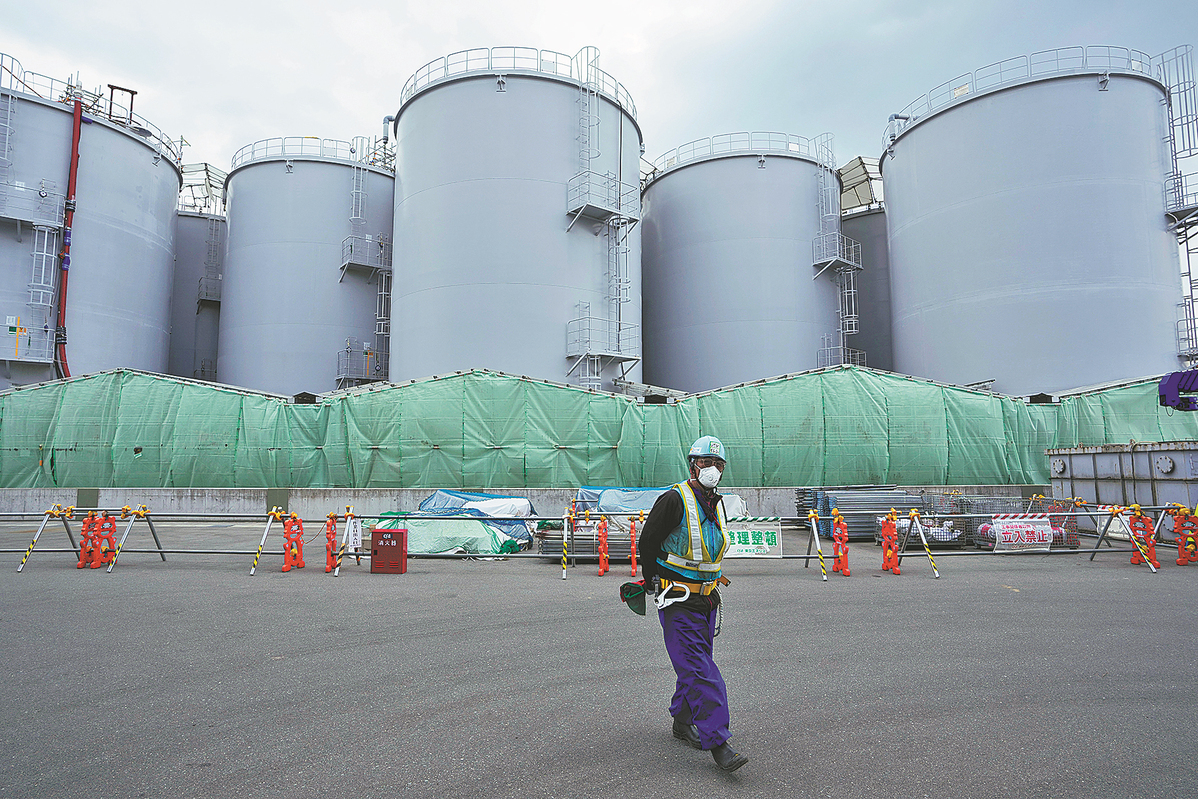
China on Monday urged Japan again not to arbitrarily start discharging nuclear-contaminated water from the Fukushima Daiichi nuclear power station into the Pacific Ocean.
Liu Jing, deputy director of the China Atomic Energy Authority, told a meeting of the International Atomic Energy Agency Board of Governors in Geneva that Japan's discharge plan is not the country's private matter, but concerns the global marine environment and public health.
Liu said the IAEA has neither completed its assessment of Japan's plan nor drawn specific conclusions, and all its three reports published so far pointed out the plan's noncompliance with the agency's safety standards and suggested improvement.
The contaminated water is the byproduct of cooling the plant's nuclear reactors following the strong earthquake and tsunami in March 2011.
More than 1.3 million metric tons of radioactive water is now stored in around 1,000 tanks at the site, which means its release into the ocean could take as long as 30 years. The water contains over 60 radionuclides, which will be carried through the ocean to all parts of the world in a decade, causing unforeseeable harm to the marine environment and people's health, experts said.
However, Japan has arbitrarily approved its own plan and expedited the construction of discharge facilities, ignoring the advice of the IAEA and the opposition from both home and abroad, Liu said, calling Japan's move "an extremely irresponsible act that has drawn grave concerns from the international community".
Stressing that Japan's plan to dump contaminated water into the ocean is not the only feasible way of disposal, Liu said Japan should not use the assessment from the IAEA technical task force as a free pass for its discharge plan.
He urged Japan not to distort the reports of the IAEA task force to justify its discharge plan, or ignore the authoritative suggestion from the task force, or set a deadline for the publication of the task force's final assessment report.
Noting that the disposal of contaminated water will span a long time and involve many uncertainties, he said that Japan should allow effective international supervision of water disposal, address the legitimate concerns of its neighbors and Pacific island countries, and hold meaningful consultations with stakeholders.
'Irresponsible act'
Li Song, China's permanent representative to the United Nations in Vienna, also decried Japan's "extremely irresponsible act" of pushing ahead with its discharge plan despite international opposition.
He urged Japan to respond to the concerns of the international community and refrain from arbitrarily discharging contaminated water into the ocean.
Such water disposal is a highly controversial issue that needs to be seriously and prudently addressed by the international community and IAEA member states, Li said.
China will participate in the relevant work of the IAEA with a strong sense of responsibility, Li added.
In Beijing, Foreign Ministry spokeswoman Mao Ning urged Japan to consult with stakeholders and relevant international organizations about its discharge plan.
She made the remarks at a news conference when asked to comment on media reports that Japanese Prime Minister Fumio Kishida said last week that the nuclear-contaminated water will be released into the ocean between spring and summer this year.
"We have noted relevant reports and are gravely concerned. In disregard to the strong concerns of people in Japan and the rest of the world, the Japanese government is set on pushing through the ocean discharge plan despite its obligations under international law. This is an irresponsible act that will endanger the global marine environment and people's health," Mao said.










