



BRI seen as spurring development vitality









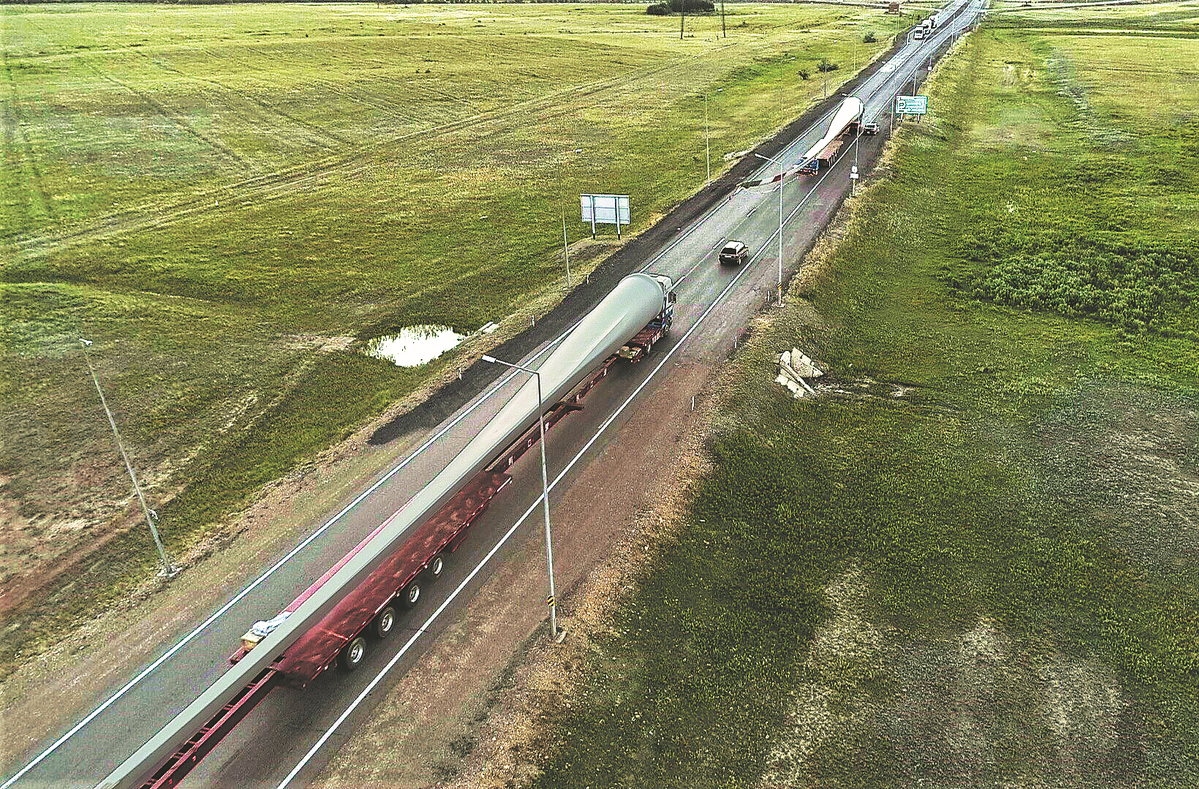
Initiative plays pivotal role in helping to boost global growth, experts say
The Belt and Road Initiative is expected to play an ever greater role in boosting infrastructure projects and speeding up development in many countries thanks to China's high-quality opening-up and international collaboration.
The BRI, proposed in 2013, has become the biggest and widest-ranging platform for international collaboration in building a shared community for mankind, experts say.
The countries and regions involved in the BRI, especially the ASEAN countries, have enjoyed a modest rebound in infrastructure construction this year thanks to economic recovery and the waning impact of the pandemic, said Fang Qiuchen, chairman of the China International Contractors Association.
In the Belt and Road Infrastructure Development Index Report 2022 co-published earlier by the association and the China Export and Credit Insurance Corporation, the overall score rose from 113 last year to 114 this year for many reasons, including the global economic recovery and the impact of the pandemic wearing off, Fang said.
Members of the Association of Southeast Asian Nations have recorded good momentum, the best among all 63 BRI countries in Asia, Europe and Africa, according to the report.
Strong economic momentum and continued improvement of the political and business environment made ASEAN countries take leads in the rankings, Fang said. Portugal, Brazil, Angola and five other Portuguese-speaking countries are included in the index.
An international coalition for BRI green development with more than 150 partners from more than 40 countries has been established, the Vice-Minister of Ecology and Environment Zhai Qing said during the 20th National Congress of the Communist Party of China on Friday.
The coalition is working to strengthen policy dialogue and joint research, and support the United Nations 2030 Agenda for Sustainable Development, he said.
As many parts of the world look to revive their economies under COVID-19, the infrastructure industry can seize more opportunities in BRI countries and regions where demand for improving cross-border connectivity and people's lives by boosting infrastructure is becoming more evident, Fang said.
Risk management
However, those working in the infrastructure field will need to strengthen risk management, advance international collaboration and promote high-quality and sustainable development with people-centered thinking, the report said.
Some countries are unwilling to play a greater role in development collaboration, and only want to undermine BRI collaboration, China's permanent representative to the United Nations, Zhang Jun, said last month.
"Facts have fully proved that their behaviors are purely politically motivated. They have seriously poisoned the atmosphere of international cooperation, which serves no one's interests."
The initiative has always been development-oriented, and consistent efforts have been made to ensure that it is high-standard, sustainable and people-centered, Zhang said.
The World Bank estimates that infrastructure investment in the BRI could lift 7.6 million people worldwide out of extreme poverty and 32 million people out of moderate poverty.
According to the index report, Indonesia topped the ranking of individual economies with a score of 131, followed by the Philippines with 129 and Malaysia with 127.
Demands on transportation have largely driven countries to enhance infrastructure construction, the report said. Among the 71 countries and regions surveyed, 27 said they have put forward transportation infrastructure investment plans, including the 1,035-kilometer China-Laos railway connecting Kunming, the capital of Yunnan province, with the Laotian capital Vientiane.
Green energy has added new impetus to infrastructure development in the BRI countries, said Wang Wen, chief economist of the China Export and Credit Insurance Corporation.
This year 19 out of 71 countries surveyed said they had initiated renewables infrastructure construction, the report said. Projects such as a wind farm in Brazil and the Mentarang Induk hydropower plant in Indonesia have set examples for BRI renewables development.
Xinhua contributed to this story.










