



Partnership can boost rural industrialization in Africa









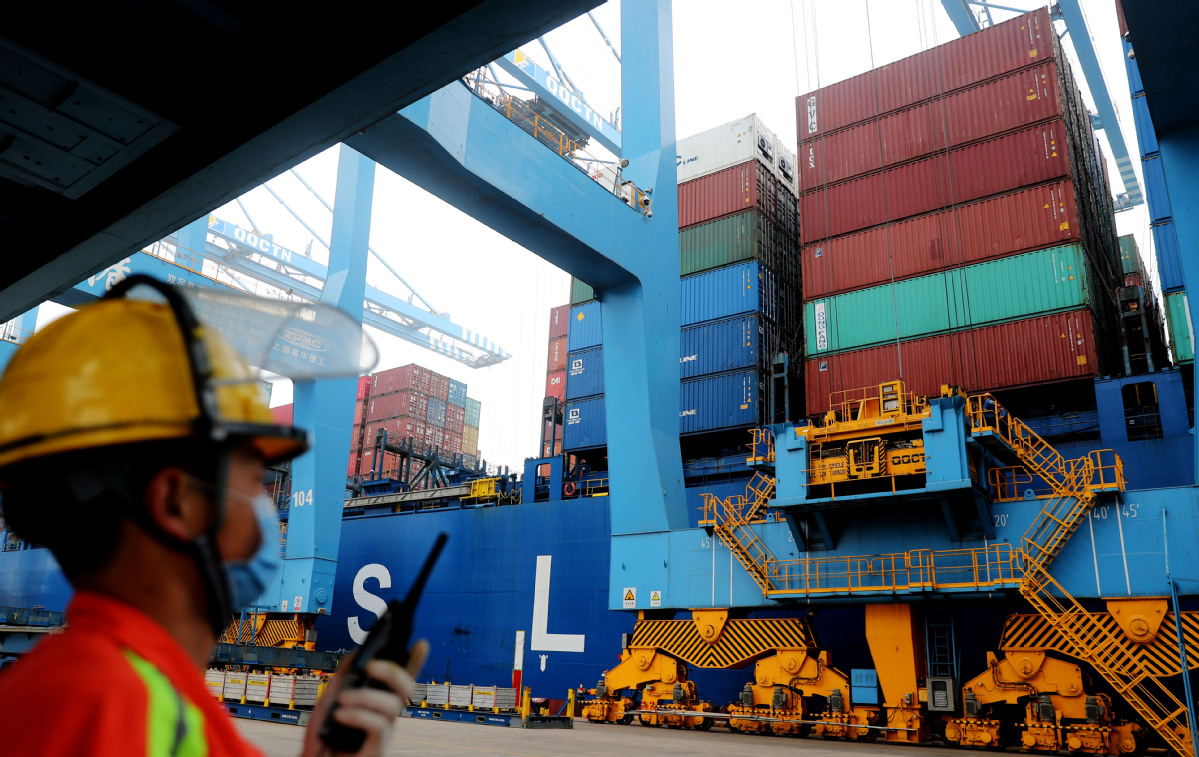
Africa remains the world's least-industrialized region, despite the continent's ongoing infrastructure development. Its economies still rely on raw materials, so its share of global manufacturing is only around 1.9 percent, according to the African Development Bank.
Thus, when the global community faces unprecedented challenges emanating from changing global governance, the socioeconomic impacts of COVID-19 and the ongoing Russia-Ukraine conflict, Africa becomes the hardest-hit continent on matters related to food security and economic growth.
In order to promote sustainable rural industrialization as part of Sino-African cooperation, the two partners need to leverage China's competitive industries and Africa's potentially high capacity for industrialization, in order to create diversified and balanced economies, especially within the rural areas of the continent.
The African Development Bank recently launched the $1.5 billion Emergency Food Production Facility to mitigate the effects of the Russia-Ukraine Conflict, climate change and COVID-19 on food security in Africa.
The program aims to provide 20 million African smallholder farmers with certified seeds and increase access to agricultural fertilizers. The project will also support governance and policy reform to boost investments in Africa's agricultural sector. The facility will enable African farmers to produce 38 million additional metric tons of food worth $12 billion over the next two years.
However, the question that begets is, what will happen to the food once produced by small-scale farmers from rural areas in Africa? Will Africa export the food as raw materials, or will there be value addition?
In December 2019, it was reported that farmers in Kanjuiri, Kenya, poured milk on the streets because of poor prices and lack of market access, as roads were impassable due to heavy rains. Further, in the same county of Nyandarua in Kenya, in 2009, while millions of Kenyans were facing starvation, farmers in that area had a bumper harvest, and due to lack of agri-industries that process and preserve the food produced in that region, the farmers opted to feed their livestock to avoid losses due to poor prices and impassable roads.
The scenarios in Kenya show that Africa's biggest problem is the lack of adequate agri-processing industries and infrastructure development such as roads, especially in rural areas. However, giving credit where it is due, African governments have made huge strides, with more than 100,000 kilometers of roads already constructed under the Sino-African partnership.
In China, after reform and opening-up began in 1978, the fast-growing rural industries acted as the engine of prosperity and development.
By decentralizing some industries from urban to rural areas, China managed to open up the marginalized regions and empowered local farmers to play a key role in enhancing food security in the country.
Similarly, in Africa, to increase food production and market farm output to feed the rapidly growing population and reduce the dependence on food imports, a focus on developing rural industries is crucial.
A look at the topography of the continent shows that, in 2019, Africa had approximately 1.1 billion hectares of agricultural land, which corresponds to nearly 40 percent of the continent's total land area. However, few agri-processing industries are located in the rural areas that have swaths of farmland.
Thus, as the African Development Bank implements the African Emergency Food Production Facility, a lack of adequate rural industries stands in the way of achieving the intended outcome of attaining food security and economic growth in Africa.
However, increasing industries in rural areas may come at a cost to the environment and could diminish agricultural land. To mitigate the negative impacts on the environment, China and Africa need to focus more on developing smart special economic zones in rural areas and industries that rely on green energy.
The author is executive director of the China-Africa Center at the Africa Policy Institute in Kenya.










