



Space telescope spots its first star-and takes a selfie









WASHINGTON-The James Webb Space Telescope has seen its first star, and even taken a selfie, NASA has announced.
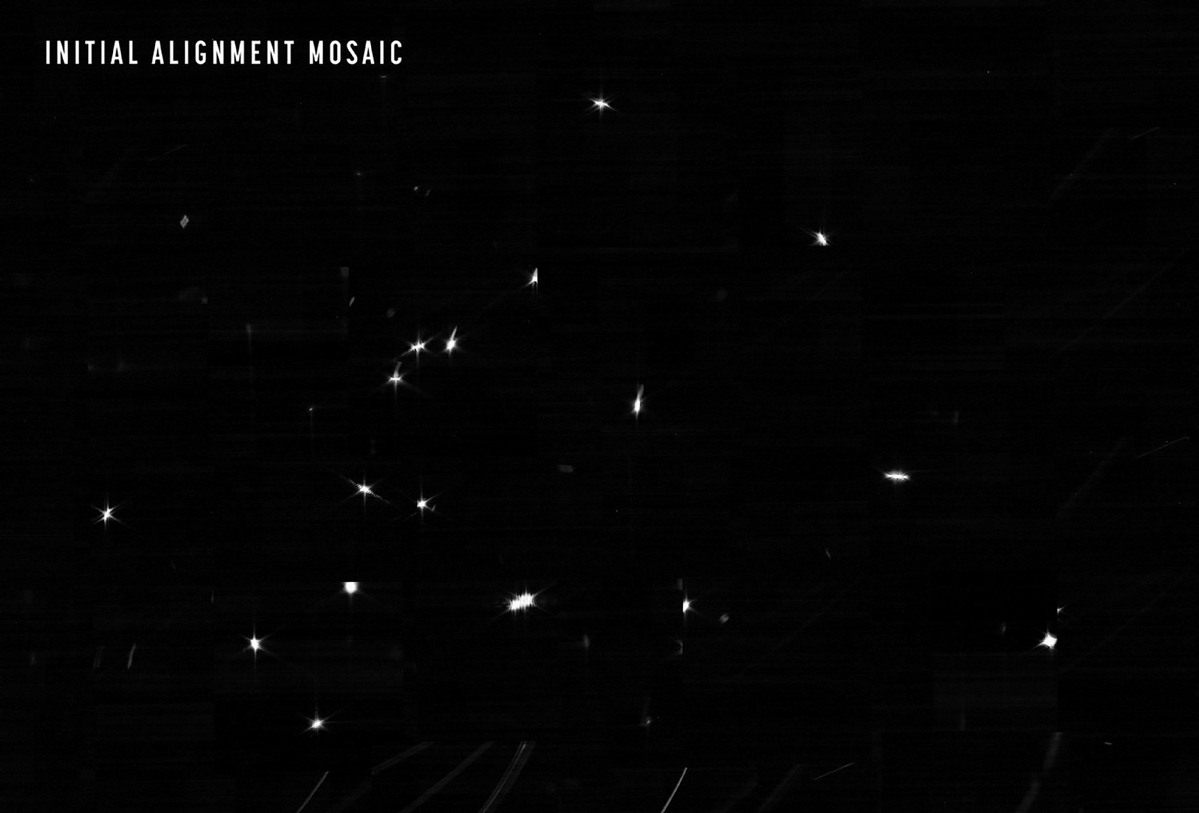
The first picture sent back of the cosmos is far from stunning: 18 blurry white dots on a black background, all showing the same object: HD 84406, a bright, isolated star in the constellation Ursa Major.
But in fact, it represents a major milestone. The 18 dots were captured by the primary mirror's 18 individual segments, and the image is now the basis for aligning and focusing those hexagonal pieces.
The light bounced off the segments to Webb's secondary mirror, a round object at the end of long booms, and then to the near-infrared camera instrument, Webb's main imaging device.
The image capturing process began on Feb 2, with Webb pointing at different positions around the predicted location of the star.
Though Webb's initial search covered an area of the sky about the size of the full moon, the dots were all located near the center portion, meaning the observatory is already relatively well-positioned for final alignment.
The $10 billion observatory was launched from French Guiana on Dec 25 and is now in an orbit aligned with the Earth's around the sun, 1.5 million kilometers from Earth, in a region of space called the second Lagrange point.
To aid the process, the team also captured an image taken not through an externally mounted camera but through a special lens on board.
By summer Webb will begin its science mission that includes using its high-resolution instruments to peer back 13.5 billion years to the first generation of galaxies that formed after the Big Bang.
Agencies Via Xinhua










