



New testing kit able to detect 15 strains of novel coronavirus









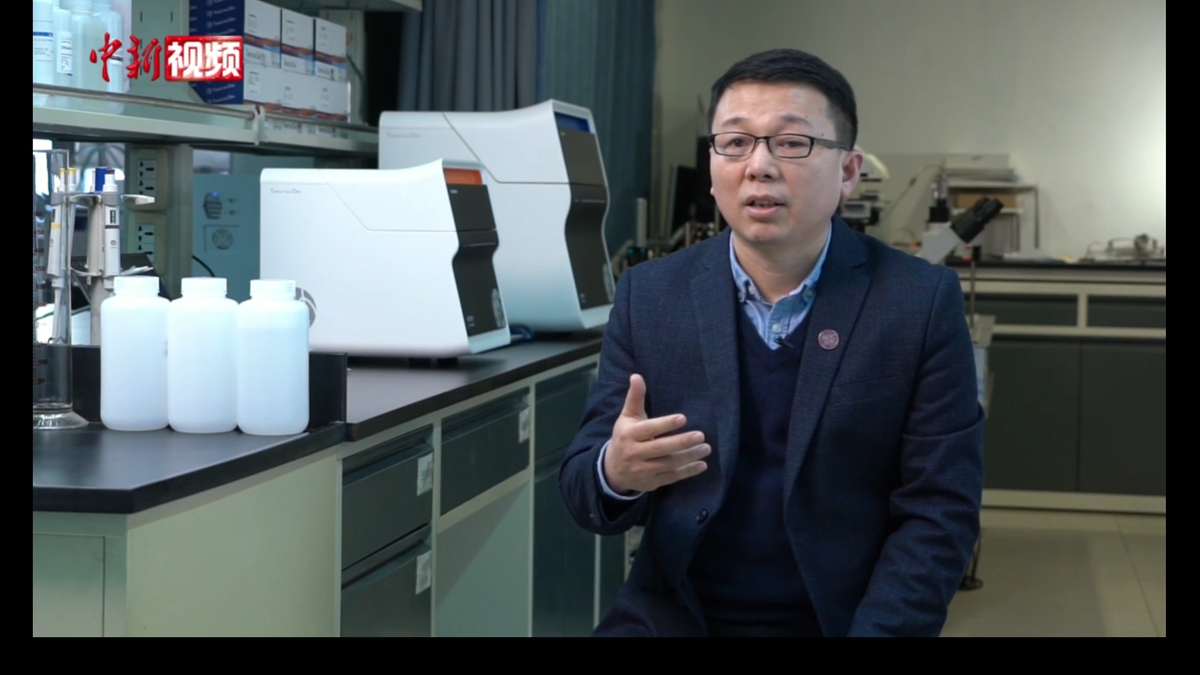
China approved a new COVID-19 testing kit on Saturday that can accurately diagnose 15 common strains of the novel coronavirus, including the Delta and Omicron variants, according to kit developer Tsinghua University.
The kit, which was approved by the National Medical Products Administration, uses digital polymerase chain reaction technology that offers significantly greater precision and sensitivity than conventional PCR tests, making it ideal for detecting subtle differences among COVID-19 variants, the university said.
Digital PCR technology is a highly advanced technique typically used in the detection of rare mutations and next-generation gene sequencing. The testing kit is the first using such technology to be approved in China.
Guo Yong, a professor at Tsinghua's School of Medicine, said the kit can reduce testing errors and can detect a variety of COVID-19 variants, including Delta and Omicron.
First conceived in 1992, digital PCR works by dividing the sample into thousands of tiny but discrete reaction chambers, each containing template molecules labeled 1 or 0. Subunits that have the target gene sequence will generate a fluorescent signal and be flagged as 1, while those without the target will be labeled as 0.
After counting the number of positive reactions and applying a data analysis technique called the Poisson distribution, scientists can yield an absolute measurement of the target nucleic acid concentration in a sample.
This can overcome the common limitations of conventional PCRs, such as low accuracy when measuring rare targets and a lack of sensitivity when the sample contains other distracting gene sequences.
However, some notable drawbacks of the technology are expensive instruments and reagents, a more complex workflow that requires trained specialists, a higher risk of contamination due to the open nature of some of the procedures, and a longer time needed to produce a result, according to the Journal of Clinical Microbiology.
Many of the disadvantages are due to technical limitations that can be addressed by manufacturers as they improve their instruments and reagents, the journal added.





