



China becomes strong supporter, contributor to global biodiversity agenda, says UN official









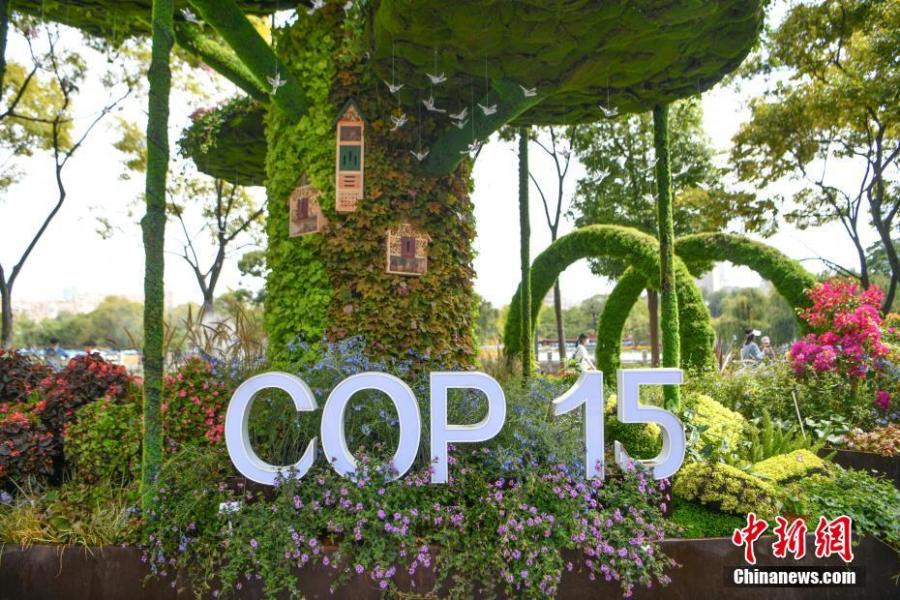
BEIJING - China has greatly supported and contributed to protecting biodiversity and its philosophy of ecological civilization is "critical for all countries to achieve the global biodiversity goals," a United Nations (UN) official has said.
"Ecological civilization is an interesting concept. And why interesting? Because it's looking at the relationship between the society and nature," said Elizabeth Maruma Mrema, executive secretary of the Convention on Biological Diversity.
The concept demonstrates "the mainstream of biodiversity across sectors, across departments, which is also critical for all countries to achieve the global biodiversity goals," she told Xinhua in a recent interview.
Mrema has arrived in China to participate in the 15th meeting of the Conference of the Parties to the UN Convention on Biological Diversity (COP15), which is to be held in China's southwestern city of Kunming.
Themed "Ecological Civilization: Building a Shared Future for All Life on Earth," the meeting is the first global conference convened by the United Nations on the topic of ecological civilization.
The first part of the meeting is set to kick off on Monday when participants are expected to review the "post-2020 global biodiversity framework" to draw a blueprint for biodiversity conservation in the future. The second part, to be held in person in the first half of 2022, will see broad and deepened negotiations toward an ambitious and practical framework.
"This framework will actually replace the Aichi Biodiversity Targets, which guided our implementation for the last 10 years," she said.
Mrema expects that a Kunming Declaration will be adopted at the first part of the meeting, saying it will help "build momentum on the importance of biodiversity conservation" and demonstrate that "loss of biodiversity is not waiting for us."
In the past several decades, "China has been a strong supporter and contributor to the global biodiversity agenda," she said.
Mrema mentioned that China is among the first countries to become a party to the Convention on Biological Diversity. It has also ratified two protocols to the convention, namely the Cartagena Protocol on Biosafety and the Nagoya Protocol on access and benefit-sharing.
Moreover, "China has been one of the biggest donor countries to the core budget of the convention and the protocols, particularly since 2019," Mrema said.
Offering to host the COP15 conference is "a clear demonstration of China's leadership and commitment to biodiversity," she said.
Mrema also recognized the restoration efforts that China has carried out over the last decades to protect and conserve biodiversity, saying the efforts clearly represent a good model for future work, which can also be emulated and learned by other countries.
"The Chinese government has continued to apply a long-term approach to halt and reverse biodiversity loss with multiple disciplinary teams that can offer evidence-based solutions to address social economic complexities and can provide inclusive and accessible policy directions, including the ecological red line policy, which will enable to build a resilient environment able to adapt to future impacts and shocks," she said.
"And the Chinese notion of unity, of nature and man, we hope, will be a good example for other countries to follow or to emulate," she added.
Speaking of challenges in terms of biodiversity, Mrema said the ongoing COVID-19 pandemic is "a major one," which has affected both our health and biodiversity.
A UN report released in 2019 identified five direct drivers of biodiversity loss as changing use of sea and land, direct exploitation of organisms, climate change, pollution and invasive non-native species.
To prevent biodiversity loss, Mrema said, the whole world should effectively protect more land and oceans, ensure sustainable consumption and production, ensure that all actors are engaged in protecting nature, and enhance cooperation among governments and with all stakeholders.
"We are responsible for really taking the transformative actions to ensure that harmonious relationship with nature. And therefore, our relationship with nature needs to change," she said.










