



Jilin hunter-turned-ranger passes forest knowledge to new generation









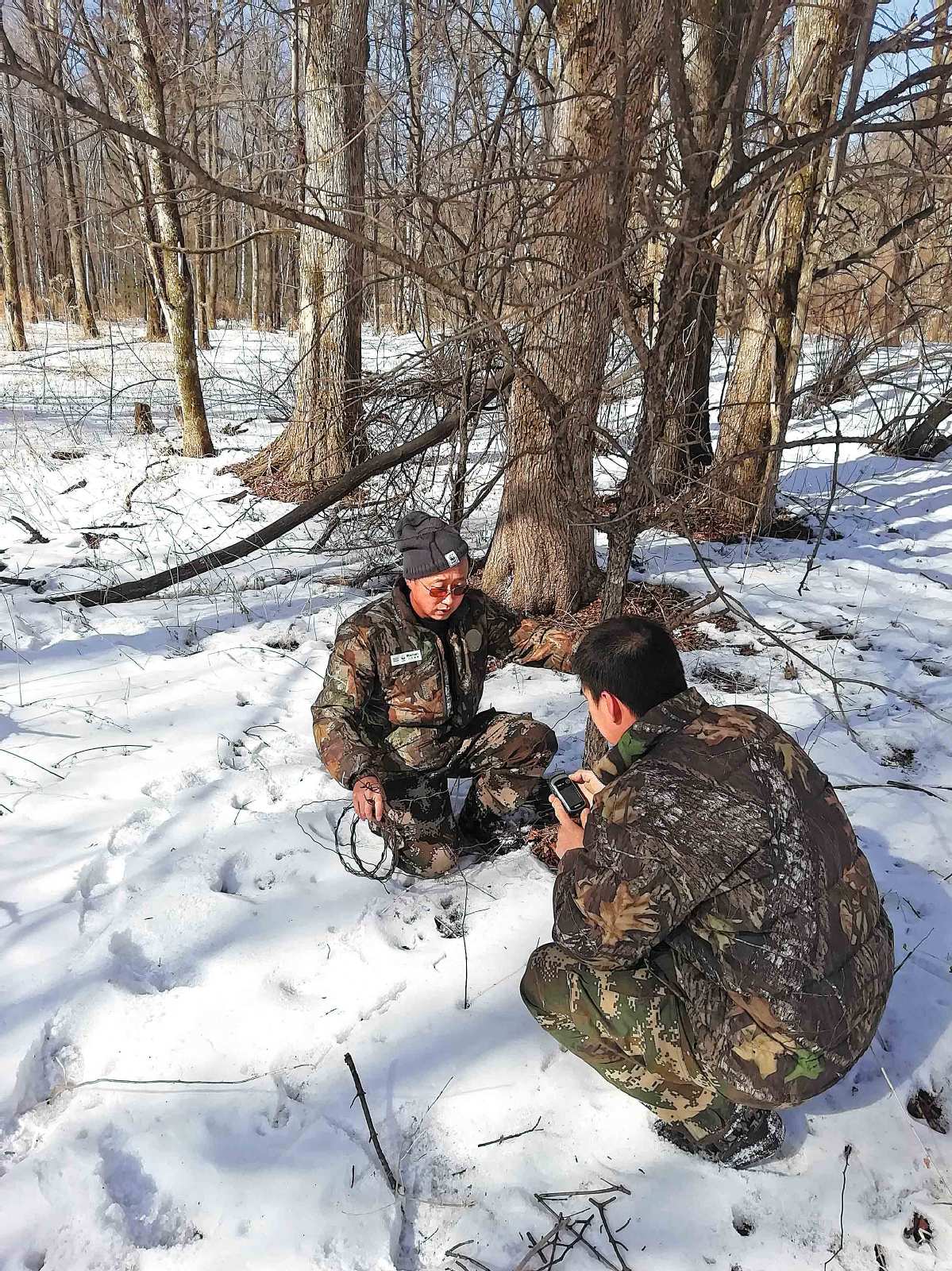
Over the past few decades, Wan Zhongwu has walked the forests administrated by the Huangnihe Forestry Bureau in Dunhua city, Jilin province, countless times. Not as a hunter, as he did until 1996, but as a ranger at the Huangnihe National Nature Reserve.
There, he puts the skills he developed over the years as a hunter into wildlife conservation.
The 50-year-old was born in a forest farm belonging to the bureau, located in the Changbai Mountains, an area rich in forest resources.
"We had a long tradition of hunting and good hunters were respected," Wan said. "When I was 15, I began to go hunting in the forests with my father, who was an excellent hunter."
Wan said that he inherited his father's talent, and after only two years, he could do the job alone.
Every hunting season, which lasted from early autumn to Spring Festival, he caught dozens of wild boar and deer.
"At the time, I had no idea of wildlife protection," he said. "However, the first day my father took me to hunt, he told me we had to stop in early spring to not interfere with the breeding season."
Hunting traditions began to change when China implemented a strict firearm control policy in 1996 and promote environmental protection measures in 1998.
"In 1996, I handed over my shotgun to the local public security department, ending my career as a hunter," he said.
"To increase the family income, I began to grow black fungus and breed forest frogs in the nearby mountains."
Wan thought his relationship with wild animals had come to an end when he stopped hunting, but that changed in 2012.
"That summer, I received a call from the Huangnihe Forestry Bureau, inviting me to help teachers and students from the College of Wildlife Conservation at Beijing Normal University set infrared cameras in the forests," he said. "The bureau officials told me that they had recommended me because I know the wildlife in the area."
It was Wan's first introduction to infrared cameras and he discovered that they could capture images of endangered species he had never seen, like wild Siberian tigers.
"Thanks to my hunting experience, it took us only two days to set up infrared cameras in all the locations wild animals were most likely to visit," he said. "During those two days, the teachers and students taught me a lot about wildlife conservation, giving me the idea of joining them."
From that point on, Wan began to participate in conservation projects as a volunteer, sharing his deep knowledge and experience of nature.
On Sept 30, 2014, the reserve received a report that three cattle had been found injured by unknown animals.
"We immediately went to the site and set up an infrared camera. Only a few hours later, images of a Siberian tiger were captured," Wan said.
"We were all excited because it was the first time that a Siberian tiger had been seen in the reserve."
In October 2016, he accepted an invitation to become a forest ranger.
Walking an average of 15 kilometers each day, Wan's main duty is to find and record the tracks of endangered species, as well as removing traps placed to catch them. "We usually set out for the forest at 7 am and return at around 4 pm," he said. "It's so cold in the winter up here in Northeast China that we have to defrost our lunch in the car after work."
He's had a few memorable brushes with danger over the years.
"In the autumn of 2019, I was out alone on my way to replace the memory card in an infrared camera when I found what looked like fresh bear tracks near my destination."
While the images in the camera later confirmed Wan's suspicions, he already knew that he'd guessed correctly because to his shock, he encountered a bear on his way back.
"It was standing about 80 meters from me when I saw it," he said.
"Unfortunately, it also saw me and began to chase me. I tried to find a big enough bush to run around."
Wan explained that bears are not good at making turns, and doing so would throw the bear off and help prevent it from catching him.
Sure enough, the bear stopped running when it was 20 meters from his position and left after five minutes of staring at him.
"My hunting experience saved me, but I still remember my fear that day, even several years later," he said.
Rangers are also responsible for implementing anti-poaching measures and raising public awareness of wildlife conservation.
"In our spare time, we visit forest farms and villages to promote knowledge of wildlife conservation and dissuade poaching," he said. "Wildlife conservation requires the joint efforts of the entire society.
"Most patrol members are young people who lack experience in the forests. My aim is to pass on my experience from generation to generation."


- Quanzhou authority halts dismissal of teachers, student over phone incident
- Shanghai to build world's largest spokeless ferris wheel
- Chinese and Canadian universities celebrate 45 years of partnership
- Robots install solar panels at Xizang's 4,300-meter altitude project
- China's May Day holiday railway passenger trips top 100 mln
- Health teams rush to help victims of Hunan fireworks blast





