



CEE can be China-EU partnership's powerful engine









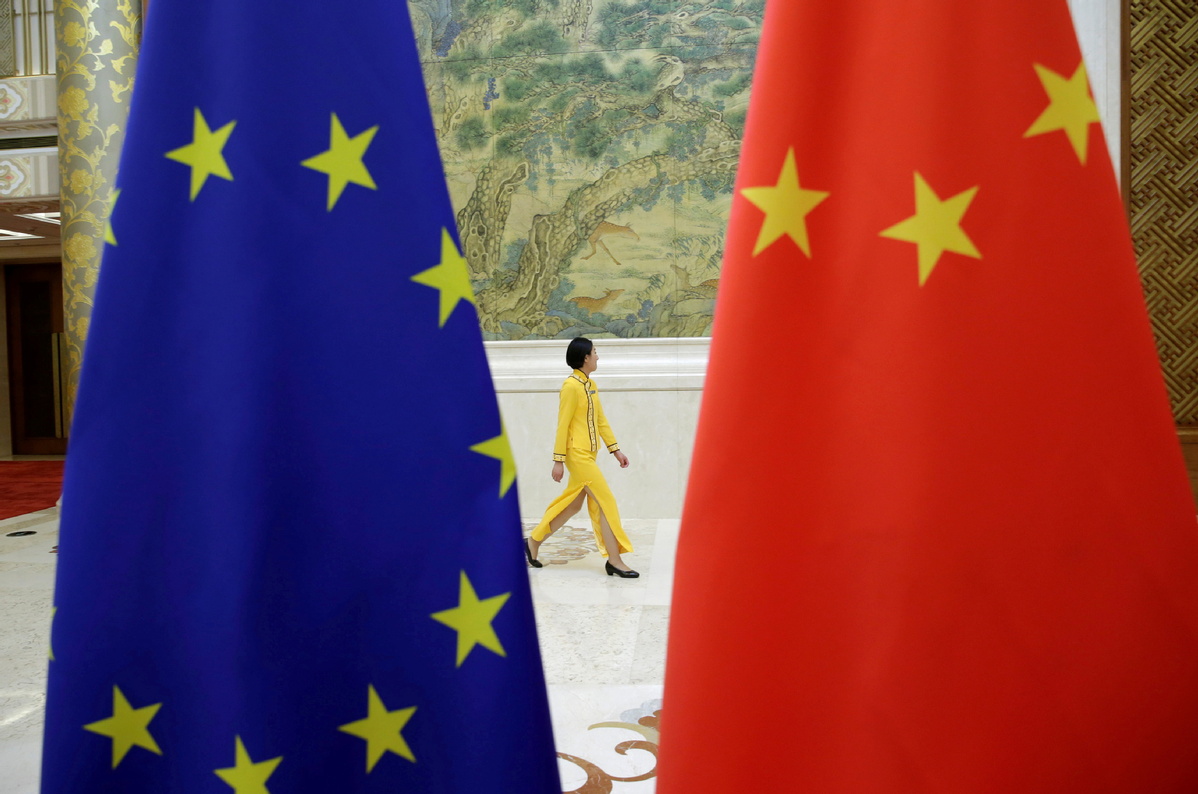
The foreign ministers of Poland, Serbia and Hungary held bilateral consultations with State Councilor and Foreign Minister Wang Yi between May 29 and 31 in Guiyang, Guizhou province.
The invitation to the three countries clearly proves China's growing interest in the dynamic Central and Eastern European region, which is an inalienable part of the wealthy European market and is important to Belt and Road Initiative planning.
China, a country where citizens save 46 percent of their income-compared with 17.6 percent in the United States and 21.4 percent in the European Union-h(huán)as an impressive amount of money for foreign investment, which is now reaching Central and Eastern European countries.
This trend is clearly visible in the first major infrastructure project carried out by China in the region-the 336-kilometer high-speed railway line connecting Belgrade, the capital of Serbia, and Budapest, the Hungarian capital. The project has cost around $3 billion.
The project will not only halve the travel time between the cities, with trains expected to reach at least 160 km/h, but will also provide an overland route for commodity freight from the Greek port of Piraeus to Eastern Europe and farther.
Notably, last month's Six-Point Consensus on Guiyang Talks between the Chinese and Serbian foreign ministers says that both countries will jointly "strive to realize the construction of the Budapest-Belgrade Railway in Serbia at an early date", "promote high-quality Belt and Road cooperation and landmark cooperation projects "and "continue to support the development and growth of the China-CEEC cooperation mechanism".
Hungary, meanwhile, is the first European nation to sign a memorandum of understanding with China involving the BRI. It also opened the first renminbi clearing center of the Bank of China and became Beijing's No 1 investment destination in Central and Eastern Europe last year. In addition, bilateral trade increased 64.7 percent year-on-year in the first quarter of this year.
China-Hungary relations go far beyond trade and investment, since both countries have developed significant ties in culture and healthcare. Hungary is home to Europe's first bilingual school, which teaches Hungarian and Chinese, and the first EU member state to approve and use China's vaccines.
After Hungarian Foreign Minister Peter Szijjarto's visit to China in May, the Hungarian government announced plans to produce the Chinese-developed Sinopharm vaccine locally at a planned $187.5 million plant in the eastern city of Debrecen.
According to Hungarian news agency MTI, the move is expected to make the country self-sufficient in vaccine production by the end of 2022.
Foreign Minister Wang made clear on May 29 that the China-CEEC Cooperation mechanism will be further improved, fueled by "three engines".
The first engine involves integration of bilateral and regional cooperation between China and CEE countries, with "the two reinforcing each other", Wang said.
The second engine relates to the need to address the needs and priorities of CEE countries, which differ from those of the developed countries in Western Europe.
Therefore, it is in the best interest of emerging economies to strengthen ties with China. Grzegorz Kolodko, in his China and the Future of Globalization: The Political Economy of China's Rise, writes that "every additional billion dollars of Chinese purchases in CEE means a noticeably higher employment rate in Poland, higher incomes in Ukraine and growing profits in the Czech Republic".
The third engine portrays pragmatic economic and trade cooperation between China and CEE countries as an important part of China-EU cooperation. The former is "conducive to the balanced development of Europe on the whole, and faster European integration", Kolodko emphasizes.
To see CEE countries' relations with China as complementing wider China-EU ties, rather than competing with Brussels, may prove to be not only highly beneficial for European integration, but also may create much needed platforms-especially in times of crisis-for dialogue, exchanges and cooperation between the people of China and Europe.
By treating East Europeans as their equals, Western Europe and Europe as a whole have a great chance to save the fragile EU bloc from further fracturing, while also strengthening the trade and investment relationship with the world's second-largest economy.
The author is former chairman of the international affairs committee at The Bow Group think tank in the United Kingdom.










