



Stance by Washington goes further than bullying









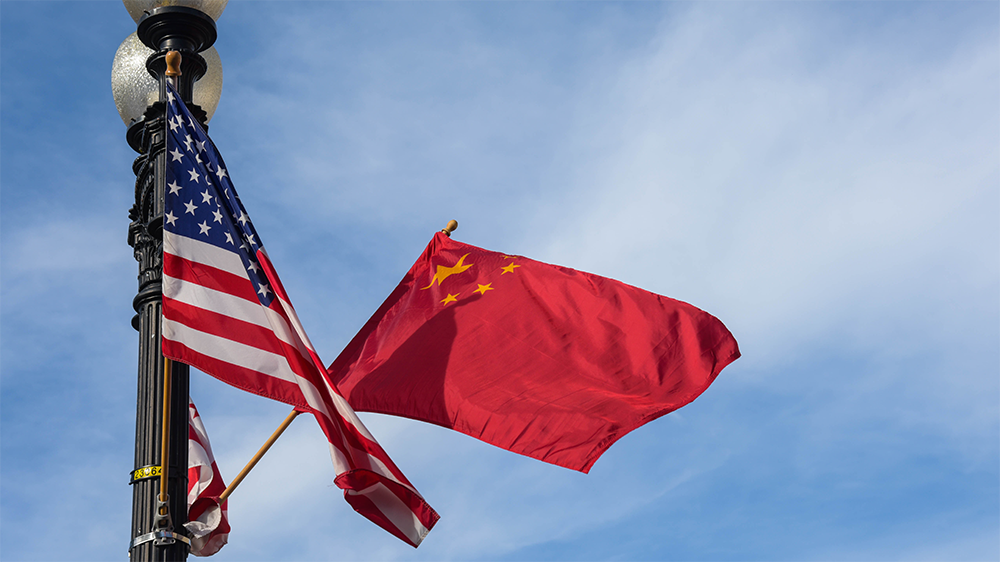
Domestically and internationally, the United States has starkly deployed its political power in response to China's enactment of a plainly required national security law for the Hong Kong Special Administrative Region. Such a law has been absent since the birth of the SAR 23 years ago.
First, US Secretary of State Mike Pompeo declared, "No reasonable person can assert today that Hong Kong maintains a high degree of autonomy from China." Then, an audaciously meddling law, the Hong Kong Autonomy Act, sailed through the US Senate and US House of Representatives in about 10 days. Next, the US is imposing and threatening to impose sanctions of various sorts.
Unconcealed is the blatant US interference in China's affairs. The US is taking more than a bullying stance on a rising China.
US commentators have critically analyzed what they call China's sharp power, apart from its soft power, which has been defined as the "ability to affect others by attraction and persuasion rather than through the hard power of coercion and payment".
In fact, the US has deployed all three powers, soft, sharp and hard, for many decades to shape transnational outcomes in America's own interest.
In 1985, American analyst George Scialabba said certain regimes following policies considered unacceptable to the US were "subjected to American hostility, subversion or even invasion".
More recently, writer and libertarian Dan Sanchez argued, after reviewing the careers of the brothers John Foster Dulles (US secretary of state from 1953 to 1959) and Allen Dulles (CIA director, 1953-61), that together they created a legacy for the US of perpetual war.
Building on this potent tradition, Washington, as typified by Pompeo, has developed a divergent, conspicuously muscular form of power diplomacy. In the case of China, the US seems strongly committed to a win-lose Sino strategy: For the US to win, China needs to lose.
In mid-April, Pompeo stipulated that Beijing should grant the US access to a Wuhan laboratory. "We are still asking the Chinese Communist Party to allow experts to get into the virology lab so we can determine precisely where this virus began." The essence of this approach is to say: We presume you are guilty, unless you can prove otherwise; and we decide if you have done so.
Most striking is the recent Australian decision to badger China on the need for an investigation into the COVID-19 virus origins. This Australian proposal came across as measurably associated with the US' ill-tempered, Wuhan-focused, inquiry demands, which were designed to further incite a blame-China narrative within US domestic politics.
As former Australian ambassador to China Geoff Raby said in June, "There are some people (in Australia) in the media, in think tanks ...who see a bad relationship with China as a badge of honor."
He added, "What is particularly pernicious is that commentators and even politicians are weaponizing the relationship and delegitimizing economic interests."
Interestingly, as Washington was ramping up its calls for a COVID-19 inquiry, New Zealand made it quite clear it was not interested in joining any sort of "witch hunt" over the COVID-19 crisis. Indeed, New Zealand's prime minister said in mid-May that New Zealand had learned from other countries, including China, adding that China was, "obviously the first to use lockdown, and I think that has saved lives globally".
How then has Australia careened into this spasm of Sino-confrontation? The reasons are complex and include a depressing lack of reflective impulse control (of New Zealand style) combined with local political opportunism.
Previous Australian foreign minister Gareth Evans has argued that excessive deference is being paid by both government and opposition to "the national security and intelligence community, now itself more collectively deferential to Washington than I can ever remember".
China does not purposefully threaten Australia in any serious way. It is an anxiously forceful US that does threaten Australia at a measurably more significant level-first, by hectoring diplomacy, encouraging intensified antipathy toward the trading partner that has done more to help remake Australian prosperity in the last 30 years than any other country; second, due to the serious hazard of being drawn into yet more US military adventures-possibly involving certain levels of forceful confrontation with China.
This is not an imaginary risk. Former US president Jimmy Carter reminded us in 2019 that America is "the most warlike nation in the history of the world". It was the principal combatant in five major wars since World War II.
The author is a visiting professor on the faculty of law at Hong Kong University.










