


A shell of a discovery









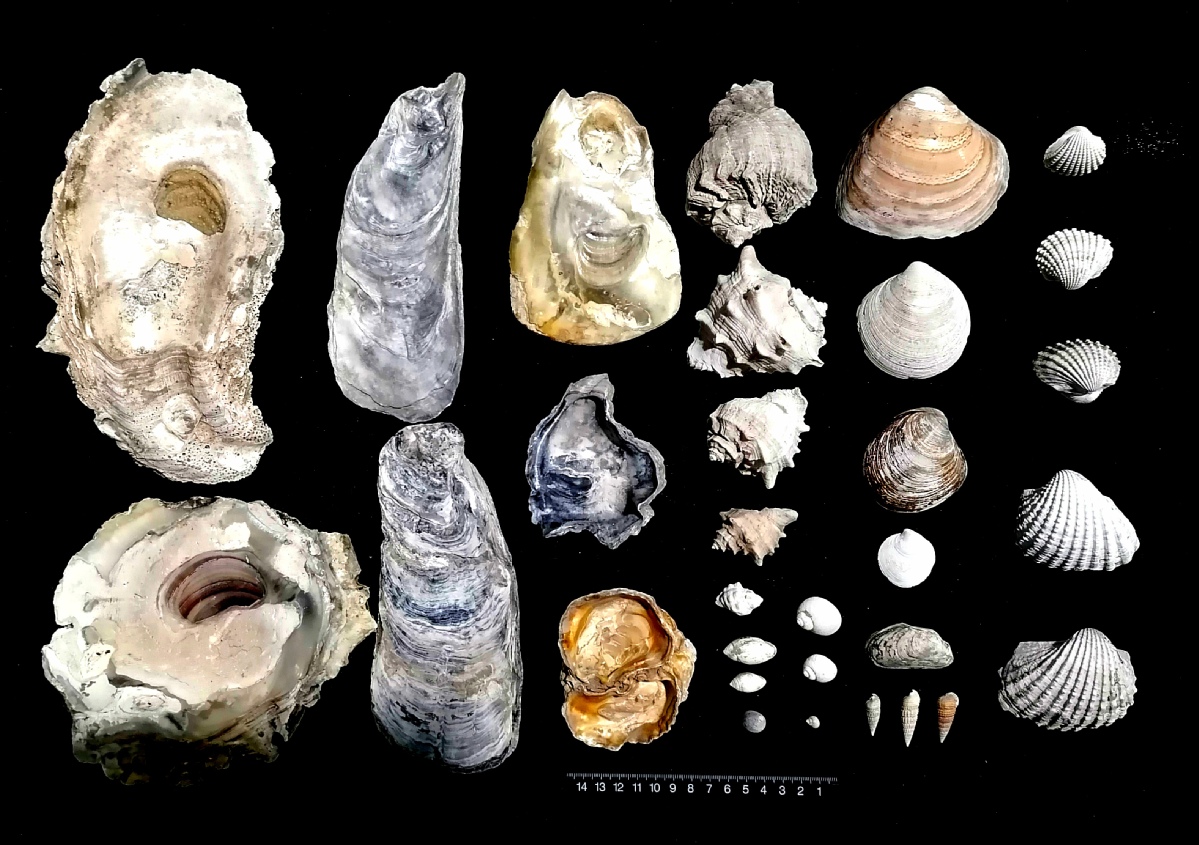
It looks like a gigantic seafood market after a particularly abundant harvest of oysters, clams, conches and spiral shells.
However, something makes it exceptional: These intact shells have laid there for about eight millennia despite looking as if they have been freshly arranged.
Sun Guoping, a researcher at the Zhejiang Provincial Institute of Cultural Relics and Archaeology, tells China Daily that he did not expect to unearth such a well-preserved find at such a large site although his decades of experience had given him optimism.
Jingtoushan was first discovered accidentally in 2013, when construction workers broke ground on a factory that was supposed to be built there. Excavation formally kicked off in September, but the extraordinary findings on site were only released to the public on May 30.
Within a few months, more than 1,000 boxes-each roughly 50 cubic centimeters-of shells have been cleared from the mud within a 750-square-meter area in Yuyao, a coastal city in Zhejiang province.
"I cannot give you accurate statistics," says Sun, also the leading archaeologist at the Jingtoushan site. "But there could be thousands more boxes after the clearance work is done.
"It's so far the oldest and largest shell mound ever discovered in China," he adds.
Only the tip of the iceberg has been excavated, considering this shell mound roughly covers 10,000 square meters, according to Sun's investigation. Radiocarbon dating results show it was inhabited by humans sometime between 8,300 and 7,800 years ago.
Shell mounds, archaeological sites mainly featuring rich mollusk shells, are found all over the world in coastal areas, notably in Denmark, Japan, and North America, as key indicators of human activity during the Neolithic period (roughly between 10,000 and 4,000 years ago in a Chinese context). In China, such mounds demonstrate how seafood dominated the diet of people in coastal provinces, ranging from Liaoning and Shandong in the north to Guangdong and Taiwan in the south-and most are less than 6,000 years old.
Until now, though, no such site had been found in Zhejiang or elsewhere on the Yangtze River Delta.
"Findings in Jingtoushan have thus filled a gap in the chain of studies," Sun says.