



No winners in an oil price war









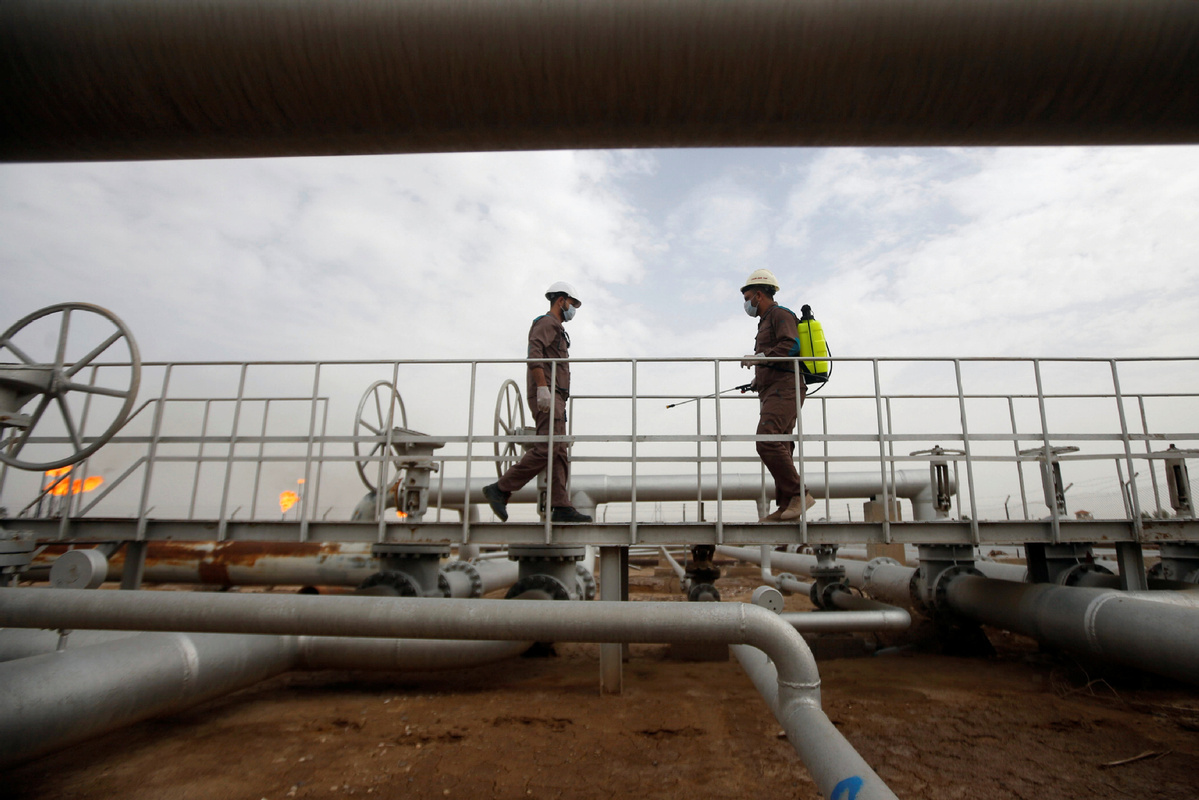
It's really not a great time to have an oil price war.
As governments around the world struggle to tackle the disruptive consequences of the COVID-19 pandemic, another entirely man-made crisis has sparked uncertainty in the international energy markets.
It was brought on by a falling-out between Saudi Arabia and Russia, the world's two top oil exporters, over how to share the pain in a declining world market.
When the Russians signalled this month that they were no longer prepared to endure further production cuts to prop up the world oil price, the Saudis retaliated with a massive 2-million-barrel-a-day increase in output.
As the market confronts the huge price collapse that followed, other countries are waiting to see which of the oil giants will blink first.
For the last four years, Moscow had been cooperating with the Organisation of Oil Exporting Countries (OPEC) on trimming output in a soft market.
The challenge had been building during the first months of 2020 as demand from China suffered its largest drop in more than a decade as the authorities in Beijing focused on battling COVID-19 by closing factories.
When the unofficial deal with Russia broke down, dollar-denominated oil prices plummeted by 10 percent and are now stagnating in the low-30s per barrel.
Both sides claim they can stand the prolonged pain of low prices. It might nevertheless mean the Russians falling back on their financial reserves, while the Saudis might have to trim their huge spending programs.
From the outside, it looks as if both are cutting off their noses to spite their own faces.
The spat may look like good news for consumers based on the somewhat simplistic theory that: cheap oil good, expensive oil bad.
However, low oil prices tend to indicate a general malaise in the world economy which, this time around, is being exacerbated by the novel coronavirus crisis. Oil prices had already fallen by almost one-third since the start of the year and before the latest drop.
Consumers should really be looking for oil price stability rather than a specific price point. That is one reason why the rest of the world has in the past tolerated the existence of-OPEC that could usually be relied on to turn the oil tap on or off in order to maintain price stability.
OPEC was not always viewed so benignly. The oil embargo it imposed in 1973 saw the price of a barrel quadruple, leading to a prolonged economic downturn in the West. Further oil shocks followed the 1979 Iranian Revolution and the start of the 1980-88 Iran-Iraq war.
More recently the importance of non-OPEC players, including Russia, Canada and Mexico, has diluted the OPEC's clout. The United States, through the exploitation of shale oil, is now a net exporter which will be hard-hit by price falls that make expensive shale production uneconomic.
Russia has its own political reasons, including disputed US sanctions, to want to see its US competitor squirm. The traditionally pro-US Saudis have also been concerned about the rise of US shale.
Saudi Arabia, as the so-called swing producer within OPEC, once had the power to stabilize the world oil price by opening or closing the taps. That role is now challenged by the likes of Russia.
But both the Saudis and Russians may be staring at a lose-lose situation that might eventually persuade one or other side to relent.
In the meantime, other producers are suffering the consequences.
US shale is already in trouble, although the enormous US economy can probably take the strain.
Others that are more vulnerable, according to international ratings agencies, include Nigeria, Iraq, Oman, Angola, Surinam and Gabon. Even economically diversified Canada is facing the squeeze and may opt to impose its own production cuts.
Even the wealthy Gulf Arab states are not immune, since they require an oil price of at least $40 to balance their budgets.
Oil is the biggest traded commodity in the world. The current volatility is damaging everyone as the producers fight to secure their own benefits.
That situation would be bad enough, even if much of the world were not engaged in limiting the spread or dealing with the consequences of COVID-19.
Some characteristically unsentimental market analysts are even suggesting the oil price shock is a bigger threat than the novel coronavirus.
That is certainly something of an exaggeration as populations around the world follow China's example is imposing stringent measures to contain the potentially fatal virus.
What seems obvious though is that if the world is facing one kind of crisis, the last thing it needs is another.
Harvey Morris is a senior media consultant for China Daily UK










