



Sleep quality suffers during outbreak: Survey









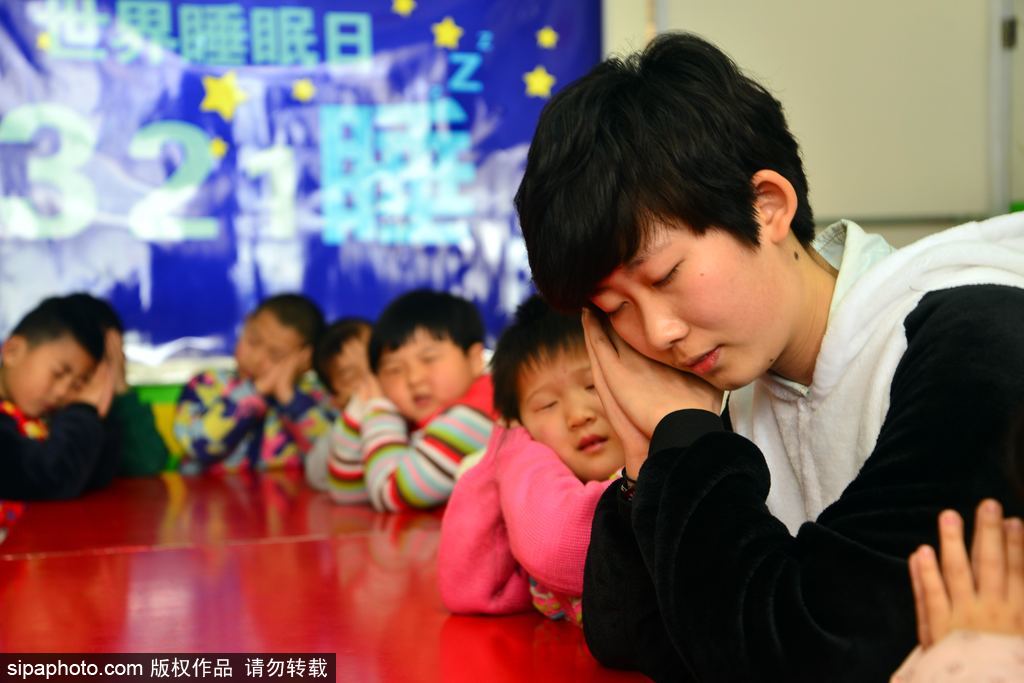
More Chinese people haven't had good sleep quality over the past two months than before, despite being able to sleep longer hours while working from home during the novel coronavirus outbreak, according to a survey released on Saturday, ahead of World Sleep Day that falls on March 21.
The survey, conducted by the Chinese Sleep Research Society, included interviews with 2,004 people aged between 19 and 80 via questionnaire in 31 provinces between Jan 1 and Feb 29.
The survey found that more than half the respondents go to bed after midnight during isolation while before January, 90 percent of them would fall asleep before 12 am.
Among the night owls, about 61 percent played with their mobile phones after failing to fall asleep. And about 47 percent of the phone users browse health news and 46 percent surf their social media.
Of all provinces, East China's Jiangxi had the largest proportion of night owls in its province, which was 93 percent, followed by 89 percent in Northwest China's Shaanxi and 88 percent in Southwest China's Sichuan, the survey found.
The survey also analyzed data from more than 30 million users of Toutiao News App, which showed that 63 percent more users read news on the app between 1 am and 2 am than before January.
Huang Zhili, professor from the school of Basic Medical Sciences at Fudan University, and also the president of the Chinese Sleep Research Society, said that surfing the internet on mobile phones can damage sleep quality.
"When browsing information on phones before sleeping, people can get stimulated and can't fall asleep easily," he said, suggesting people avoid negative factors while trying to sleep.
The survey showed that 28 percent of respondents tended to get up late, usually between 9 am and 12 pm.
Meanwhile, the number of people with more than 8 hours' sleep a day on average increased by 20 percent than that before the outbreak.
People in Hubei province sleep nine hours a day on average, ranking first, followed by Beijing, East China's Zhejiang province and Central China's Henan province.
Zhang Bin, a member of the society, said that more sleep hours don't necessarily result in good sleep quality.
"It is proper for an adult to sleep 7 or 8 hours a day. A disrupted bedtime schedule causes disorder of the internal clock and eventually damages health, such as the digestive system," Zhang said.
He suggests people still need to keep a healthy lifestyle with early hours and follow it strictly, especially during the virus outbreak.


- Chinese and Canadian universities celebrate 45 years of partnership
- Robots install solar panels at Xizang's 4,300-meter altitude project
- China's May Day holiday railway passenger trips top 100 mln
- Health teams rush to help victims of Hunan fireworks blast
- All Liuyang fireworks factories suspended after deadly blast
- Gunpowder and collapsed walls hamper Liuyang factory rescue





