



Finding hope: Officer helps thousands find loved ones









Hong's 90-year-old grandmother also cried, saying: "We have waited for her for so many years! And, finally, she's back!"
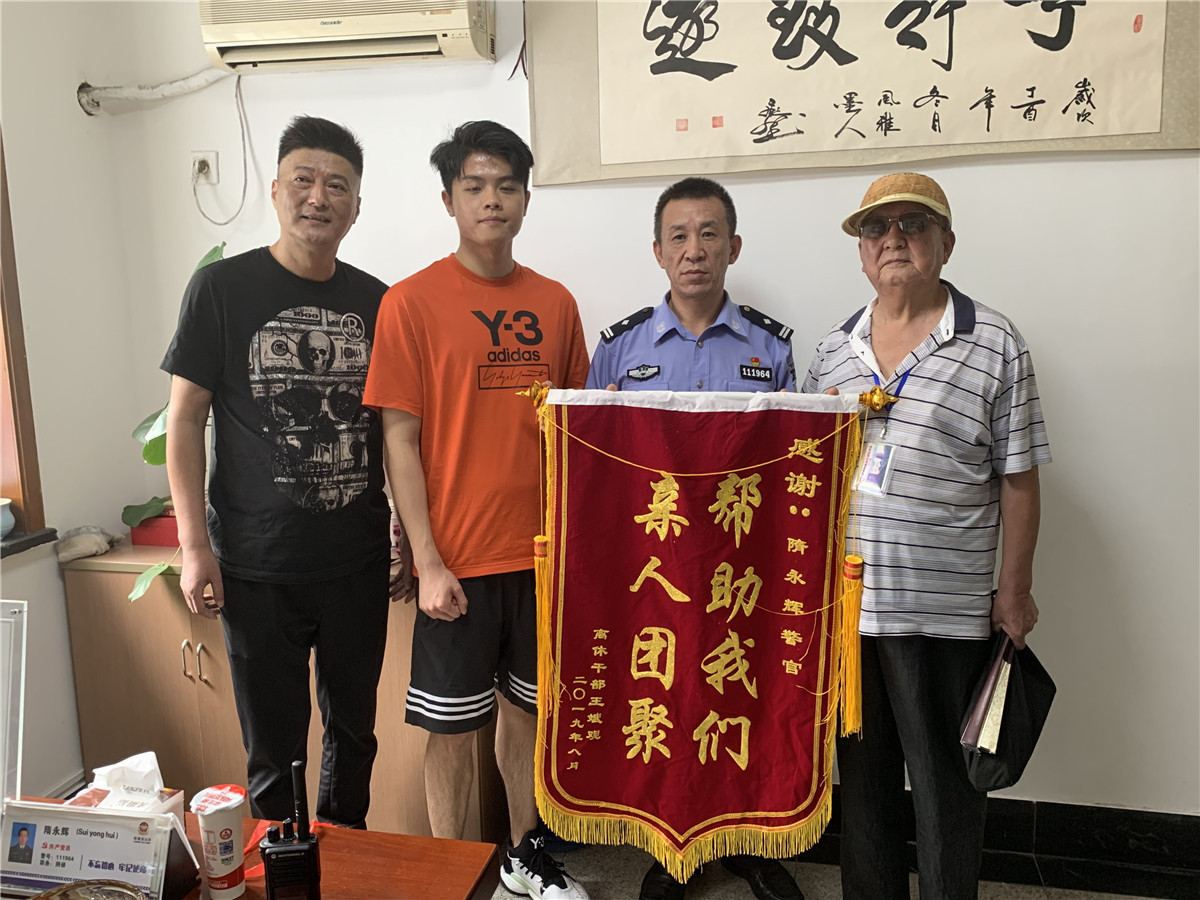
Sui's efforts have not only brought hope to desperate families but have also won him public recognition. The China News Service honored him as a role model in August.
CCTV hostess Zhang Yue praised Sui at the awards ceremony in Hangzhou.
"As a former reporter, who has covered many criminal cases, I know the loss of a family member, especially a child, often causes families to collapse and never recover," she says. "Sui's efforts bring benefits beyond measure."
Sui was born in Haiyang city, Shandong province. He joined the army in 1990 before he started to work as a policeman in Hangzhou in 2006.
His devotion to the cold cases of missing people started in 2014, when the production team of a TV program about finding missing people contacted him for help. The team first noticed the police-cooperation platform and then was advised to contact Sui, who was active on the platform.
The platform established by Qidong city's police in 2011 was used by law enforcement agencies across the country. The number of registered police on the platform now exceeds 27,000.
Sui was an early user and became familiar with many other officers on the platform.
He says there are three types of particularly tricky situations he deals with.
The first is related to people abandoned by their parents in the 1960s because of natural disasters. The second relates to kids abandoned in the 1980s, when China implemented family planning, and many girls were deserted by parents who wanted sons. The third are people who were abducted.
A lack of public knowledge serves as a major obstacle, he says.
For example, some families searching for missing people don't know about China's DNA database, which was established in 2009.
"Few people know about the database. Families and their missing relatives can easily find one another using the database," he explains.
"Our DNA technology has improved tremendously compared with 10 years ago."


- 3 killed, 25 injured in Hunan fireworks factory explosion
- 300 hikers rescued after extreme weather on Mount Wutai
- 3 dead, 25 injured in Central China fireworks plant explosion
- Eight dead after car accident in Northeast China
- Mount Wutai hikers rescued after extreme weather strands groups
- Jiangsu in poems





