



Chinese tech improves farmers' lives









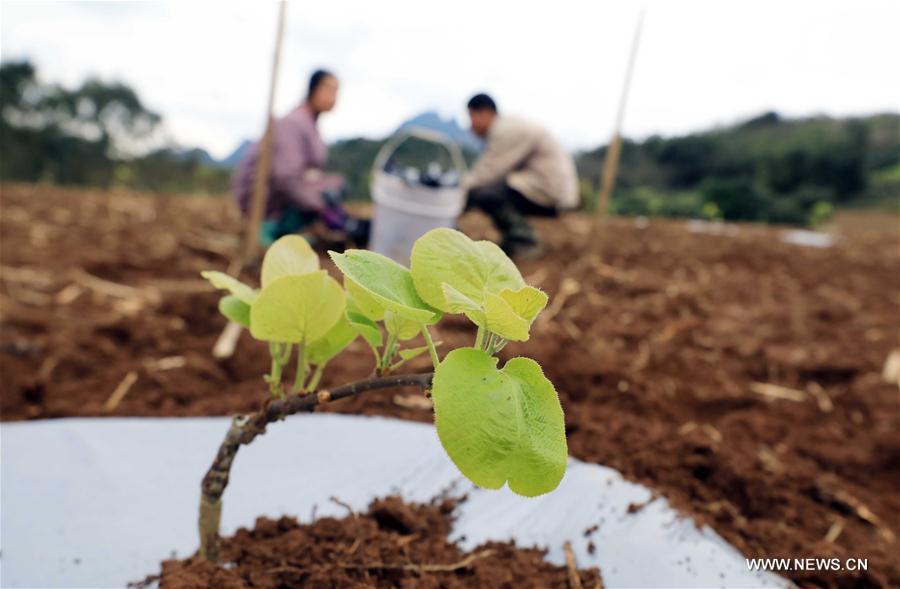
New cultivation techniques used on Tanzania plants triple production
It was early morning in June and a village woman named Tatu sat outside her huge stone house, cooking and selling vitumbua-buns made of rice flour. She explained that the low building at the corner of the land was for poultry and rabbit farming, a new activity she was dabbling in.
But the source of her income is from rice cultivation. She lives in Dakawa village, one of Tanzania's major rice production areas. "I still love cooking for my family and it is also time for sharing," she said.
The land is blanketed with deep green paddy lands. The plants' ears are pregnant with rice and farmers are expecting a bumper harvest in a month. The new variety takes about 100 days to mature. With an extensive irrigation system fed by the Wami-Ruvu river basin, coupled with the help of Chinese experts, farmers plant rice twice a year.
Agriculture here is booming. Nearly 255 kilometers from Dares Salaam, the largest city in Tanzania, agriculture remains the exclusive means of income for 51 percent of Dakawa residents, according to government data. Rice yields in Morogoro region went up due to access to high-yielding seeds coupled with farming techniques introduced by Chinese advisers, according to Andrew Ngereza, the center director of Tanzania Agricultural Research Institute, Dakawa.
The state-backed research institute, under the Agriculture Ministry of Tanzania, is partnering with the Demonstration Center of China Agricultural Technology to provide demonstrations of improved cultivars and techniques, and to train local farmers and technicians about local and Chinese agricultural technologies, particularly rice.
The demo center is one of the 14 centers proposed by China at the Beijing Summit of the Forum of China-Africa Cooperation in 2006.
Handed over to the Tanzanian government in 2011, the Chinese-built center cost about $6 million on a 153.2 acres (62 hectares) piece of land. Construction and design were completed by the Chongqing Zhongyi Seeds Industry Co under Chongqing Academy of Agricultural Sciences. It consists of experimental fields, offices, laboratory and training area, together with 123.6 acres under irrigation.
The partnership has also spread to maize tissue culture, vegetable tissue culture, banana tissue culture and poultry farming. Together, the researchers have been able bridge information and knowledge barrier hindering adoption of improved rice farming technology by farmers.
"We have jointly undertaken research and developed high-yielding seeds that are drought intolerant. Furthermore, the center has demonstrated how these varieties, coupled with modern farming techniques from China, can increase productivity," said Ngereza.
In May, Tanzania announced plans to boost annual rice production from 2.2 million tons to 4.5 million tons in a 12-year national plan. Local demand for rice has reached 2.05 million tons in 2018, according to a recent report by the government. It is projected to increase by 2.9 percent during the next five years to 2.27 tons.
Tanzania is the second largest rice producer in sub-Saharan Africa and rice covers 74 percent of the country's land, according to 2017 research by Hezron Makundi for the China-Africa Research Initiative. But the country still imports around five percent of the rice it consumes.
Low productivity in Tanzania is due to low-soil fertility, high soil salinity levels, climate change-induced droughts, unstable markets, poor innovation and a limited application of improved technologies. Low mechanization and high consumption of labor also ups production costs and triggers price spikes above the global markets, according to the report.
The center has also trained 6,000 farmers, including government extension officers. "We have found this to be more effective and reach many people," said Ngereza.
The program has been the pole center for sharing the experience of China's technology-driven agricultural modernization with Tanzania.
The Chinese experts have been instrumental in boosting productivity. "They have introduced new cultivation techniques using our own variety. The production in the area has tripled," Ngereza said, adding that simple hand-held mechanized power tools such as tractors, are also available.










