



Japanese reflect as sun sets on country's 30-year Heisei era









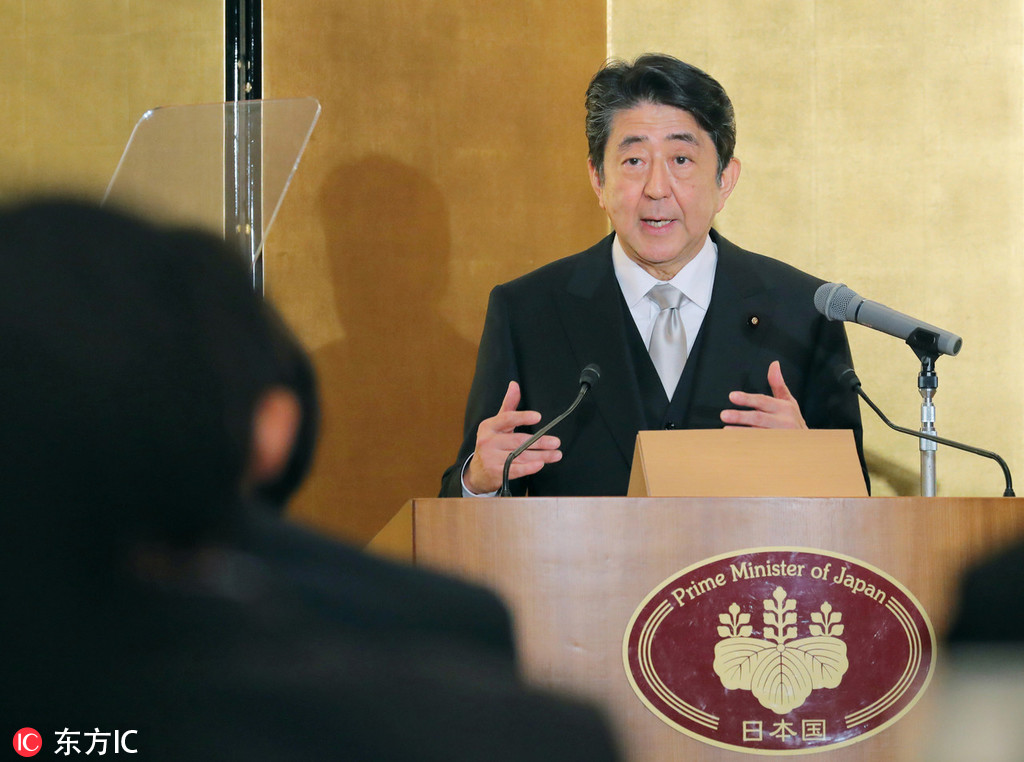
With the winding down of Japan's Heisei era-the period following the accession of Emperor Akihito in 1989-many Japanese have begun to attempt to define their own, and the country's, past 30 years.
The curtain will fall on the era when Crown Prince Naruhito ascends to the Chrysanthemum Throne on May 1, the day after his father's abdication.
When Japanese newspaper Asahi Shimbun conducted a survey in the country-asking "What kind of era is the Heisei?"-only 5 percent of respondents said it's been "bright", with 42 percent believing the era was "tumultuous" and 29 percent saying it was "stagnant".
Daichi Baba, who was born in the first year of the Heisei, which translates as "peaceful and fruitful", said he is a member of what many have called a "lost generation".
The 30-year-old said that since they grew up in a time when the economy was sluggish, many from his generation are conservative.
"Many of my classmates yearn for a job in big companies or work as civil servants, because the 'bubble economy' cut our parents' income almost by half. We are all looking for stable jobs, instead of taking any risk," Baba said.
In the initial years of the Heisei period, Japan's economic status was that of the world's second-largest economy and Asia's only economic power. But this started to fade with the collapse of the "bubble economy" in the early 1990s, and the country's self-confidence ebbed in the ensuing "lost decades"-around 20 years of economic stagnation.
Huang Dahui, a researcher of East Asian Studies at Renmin University of China, said the Heisei era has marked a dramatic change in Japan's regional status.
"Japan's unchallenged pre-eminence is a thing of the past. Over the past 20 or 30 years, many emerging Asian economies have closed the gap. In this sense, after a century as East Asia's unchallenged economic and industrial leader, Japan has become just one of several important regional powers."
He added that this created a "feeling of loss" in the Japanese people and their government during the Heisei era, which tended to make Japanese during this period more conservative.
In addition, Japan's population has been shrinking in the past 30 years and is aging, and some analysts cite fewer job opportunities for young people in the country's economy. The low birth rate will threaten the country's future development, analysts said.
Meanwhile, as globalization sweeps the world, Japanese companies have come to depend more on cheaper, nonpermanent employees, which analysts said has expanded wealth inequality and further fragmented Japanese society.
The Heisei period has also been marked by great political instability. Japanese cabinets have been short-lived in the era, with 17 men occupying the prime minister's office, from Noboru Takeshita, who was in office when the Heisei era began, to the second incarnation of Shinzo Abe's administration, which is currently in power.
Researcher Huang said it is worth noting that Abe's campaign slogan "restore Japan" has shown a longing for the "better" times of yesteryear in Japanese society. However, he added, it seems Japan is restoring more than the previous glory of economic achievement.
"The Japanese government was ambitious and gradually re-emerged as a military power in the Heisei era, as it hopes to get rid of the impact of World War II," Huang said.
On July 1, 2014, the Japanese government announced a revision of the country's defense policy, lifting the ban on the country presuming "an inherent right to collective self-defense", he said.
The changes extend Japanese security policy well beyond the constraints in place throughout Japan's postwar history, he added.
Analysts said the country is heading in a dangerous direction and is seeking new defense capabilities that exceed the limits of its pacifist Constitution.










