



Kneads must for ancestors as bread breakthrough reveals early plant use









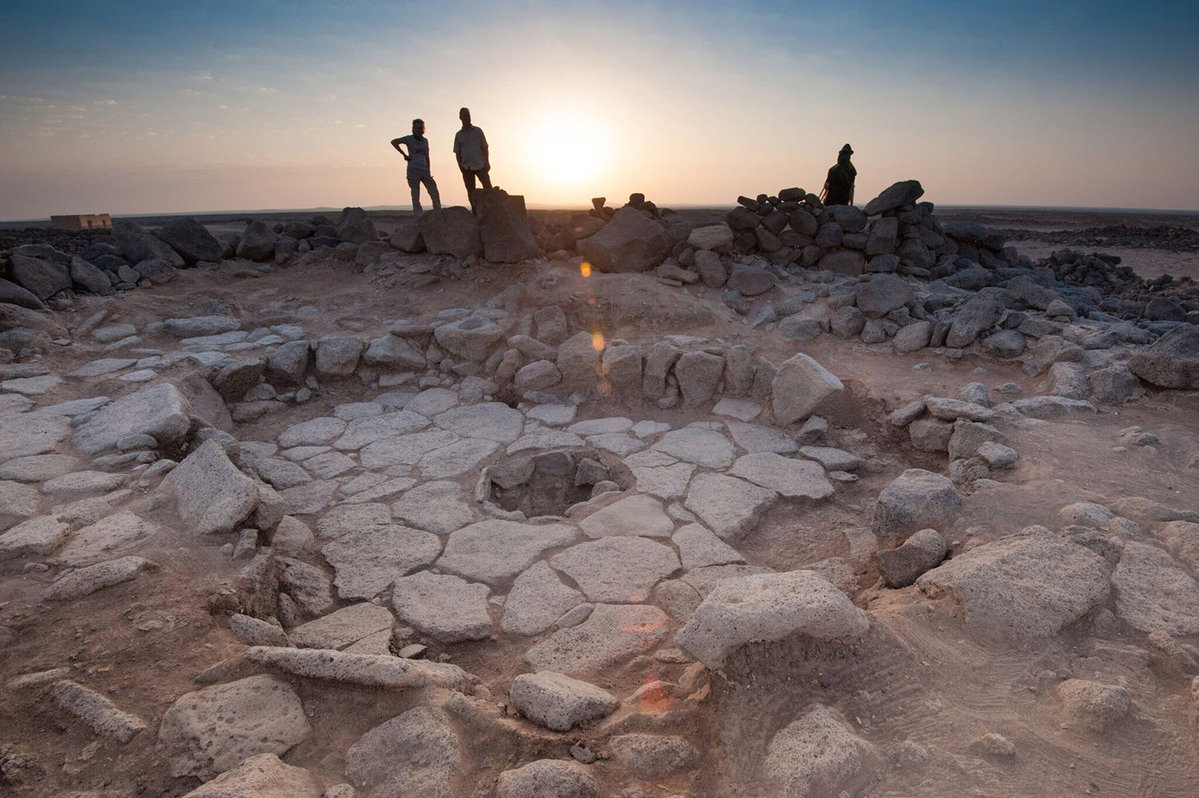
WASHINGTON-Danish and British scientists have found the oldest direct evidence of breadmaking, at least 4,000 years before the advent of agriculture.
A study published on Monday in the journal Proceedings of the National Academy of Sciences reported the charred remains of a flatbread baked 14,400 years ago at an archaeological site in northeastern Jordan.
The findings suggest that bread production based on wild cereals may have encouraged hunter-gatherers to cultivate cereals, thus contributing to the agricultural revolution in the Neolithic period.
A team of researchers from the University of Copenhagen, University College London and University of Cambridge analyzed charred food remains from a site known as Shubayqa 1 in the Black Desert in northeastern Jordan.
"The 24 remains analyzed in this study show that wild ancestors of domesticated cereals such as barley, einkorn and oat had been ground, sieved and kneaded before cooking. The remains are very similar to unleavened flatbreads identified at several Neolithic and Roman sites in Europe and Turkey," said Amaia Arranz Otaegui, an archaeobotanist from University of Copenhagen and the first author of the study.
"So we now know that bread-like products were produced long before the development of farming."
According to the researchers, Natufian hunter-gatherers lived through a transitional period when people became more sedentary and their diet began to change.
"Flint sickle blades as well as ground stone tools found at Natufian sites in the Levant have long led archaeologists to suspect that people had begun to exploit plants in a different and perhaps more effective way," said Tobias Richter from University of Copenhagen who led the excavations.
"But the flat bread found at Shubayqa 1 is the earliest evidence of breadmaking recovered so far, and it shows that baking was invented before we had plant cultivation."
They suggested that the early and extremely time-consuming production of bread based on wild cereals may have been one of the key driving forces behind the later agricultural revolution where wild cereals were cultivated to provide more convenient sources of food.
Xinhua










