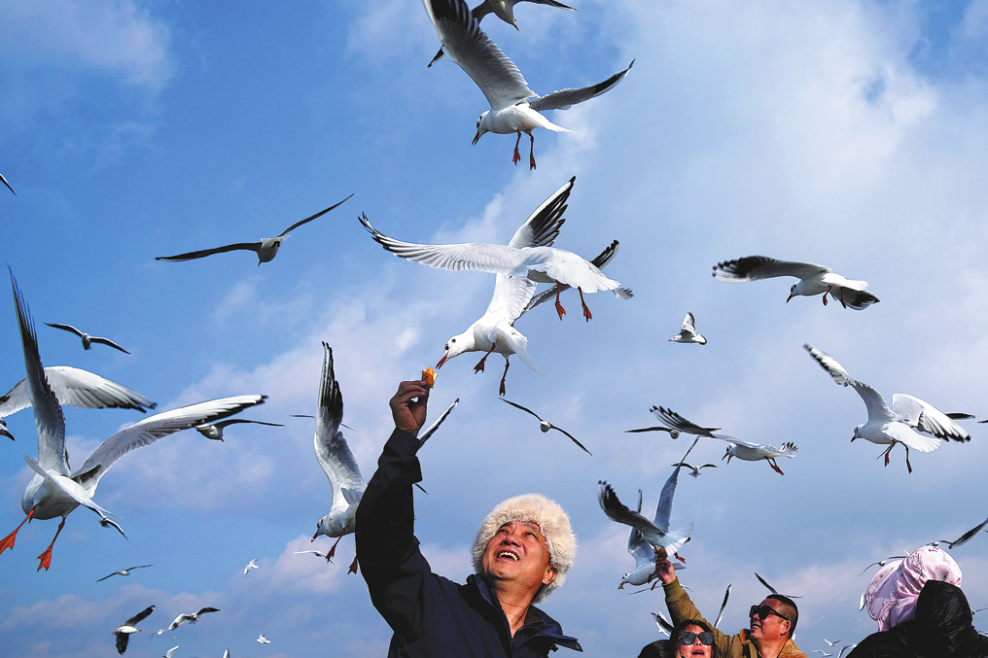
Climate change hits the poorest hardest










Inadequate defenses
Lee and his mother receive a monthly allowance of HK$4,700 ($600) from the government. The monthly rent for their small apartment is HK$3,400, leaving them just HK$1,300 for food and other necessities.
"I had to run the air conditioner on the hottest nights just so my son could sleep," said Tao, whose husband died from lung cancer seven years ago.
She eked out HK$300 a month to give Lee air-conditioned nights.
In Hong Kong, low-income families living in subdivided apartments are particularly defenseless against global warming, according to Fielding of Hong Kong University.
"Good ventilation is a determinant of good health," he said. "Imagine living in a home that lacks a flow of fresh air. That will not only trap heat, but pollutants, viruses and bacteria, so people will be infected more readily."
The warming climate also favors the growth of certain strains of bacteria. E. coli, the most common, which causes diarrhea, reproduces most efficiently at 37 C, the human core temperature.
In 2016, a group of scientists discovered that a 1 degree rise in the monthly mean temperature in Bangladesh resulted in an 8 percent rise in the incidence of E. coli.
As temperatures are projected to rise by 0.8 C by 2035, experts estimate that 800,000 new cases of E. coli-related diarrhea will emerge.
Climate change has also led to a global increase of about 9.4 percent in the transmission of dengue fever by the Aedes aegypti mosquito relative to 1950 levels, according to a report in The Lancet, a British medical journal, last year.
Aedes aegypti is not found in Hong Kong, but the city's dominant mosquito species Aedes albopictus is also a carrier.
"Higher temperatures are expanding favorable habitats for mosquitoes," Fielding said.
Gabriel Lau Ngar-cheung, professor at the Department of Geography and Resource Management at City University of Hong Kong, said the city's poorest people are the least adaptive to the warming climate.
"A 1 degree rise affects the well-off only marginally. They can turn on the air conditioning whenever they like," he said.
"But for people living at the subsistence level, it could mean real suffering, because they can't afford resources such as air conditioning to ward off damaging heat."



- Two dead, 84 injured, eight missing after blast at steel factory in Inner Mongolia
- Xinjiang prunes transform desert to oasis
- Return capsule of Shenzhou XX spaceship safely returns to Earth
- Factory blast in China's Inner Mongolia kills 2, missing rises to 8, 84 injured
- Urumqi to host youth winter games
- China's satellite data shows iceberg A23a in final stage of disintegration