Climate change hits the poorest hardest









Under the weather
A better way of understanding the effect of hot weather on humans was provided by Richard Fielding, professor at the School of Public Health at the University of Hong Kong.
He said the "wet-bulb" temperature is a useful way of assessing the dangers of extreme heat on the human body. As the name implies, a wet-bulb temperature involves wrapping a wet cloth around a thermometer bulb. That means the reading takes account of the moisture in the air, which gives a more accurate index of the heat effect on the human body.
Fielding said the core body temperature is about 37 C, but the temperature on the surface of the skin is usually about 35 C.
A wet-bulb temperature of 35 C is as much as the human body can stand. Any higher, and it is impossible for the body to cool itself through the evaporation of sweat. Heat becomes trapped inside the body and the internal temperature climbs.
As the body absorbs more heat from the surrounding environment than it is capable of dissipating, hyperthermia sets in, followed by heat cramps, exhaustion and, sometimes, lethal heatstroke. For that reason the wet-bulb temperature of 35 C is sometimes referred to as the "survivability threshold".
"If someone reaches a wetbulb temperature of 35 C and can't cool down, they will die of heat stress after six hours, even if they drink a lot of water," Fielding said.
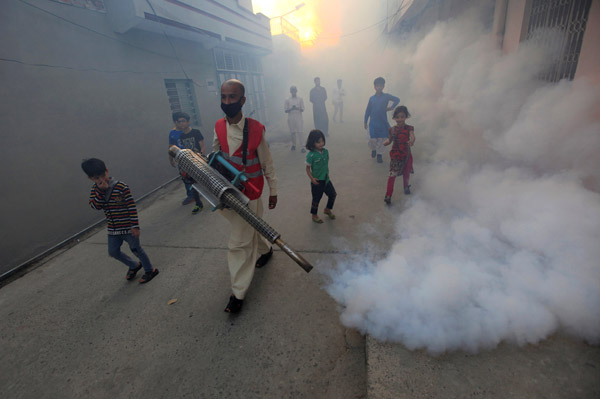
In 2015, a severe heat wave with a wet-bulb temperature at 50 C swept India and Pakistan. More than 3,500 people died in regions where there was no air conditioning and no relief from the heat.
Hong Kong has yet to see days with a wet-bulb temperature higher than 35 C, but the trend toward rising temperatures gives cause for concern. According to the city's observatory, if greenhouse gas concentrations continue to rise, the number of extremely hot and humid days, with wet-bulb temperatures of 28.2 C or higher, is expected to hit 96 per year by the end of the century.






- Shanxi ends province-wide blanket fireworks ban
- Audit: China fixes bulk of fiscal problems tied to 2024 budget
- China reports major gains in circular economy
- Chinese lawmakers review draft revision to banking supervision and regulation law
- Top legislature to study draft laws on environment, ethnic unity, national development planning
- Administrative organs must secure people's interests: senior judge