|
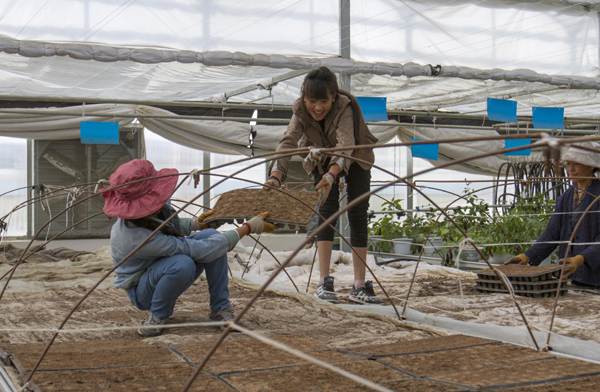 Workers tend vegetables at an agricultural demonstration area, Aug 17, 2014. [Photo/Xinhua] |
Harsh natural conditions
|
|
More than 90,000 people in seven counties in Ngari mostly make a living by farming and herding.
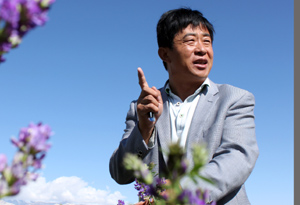
"Traditional herding depends heavily on natural grass, which is a scarce resource in Ngari," Han said. "So I decided to grow grass."
Growing the alfalfa was not easy, Han said. When the seedlings were first introduced, 99 percent of them died because of drought, cold weather and fierce winds.
But the specialist's 27 years of experience in the field helped him reduce the failure rate to less than 10 percent. An irrigation system now sprays mist to nourish his verdant spots of alfalfa amid the desert. Plastic film keeps the roots moist under the fierce sunshine.
The Shaanxi authorities also gave the milk cows to the herdsmen to encourage locals to switch to the dairy industry, which is more profitable and environmentally friendly.
"We used to sell the milk cows because we didn't know how to raise them," said Padma Lobsang, a 49-year-old resident in Ngari's Gar county.
"With the help from Mr Han, all families in my village now keep cows and grow grass."
By keeping four cows and selling alfalfa, Padma made more than 100,000 yuan a year and moved into a modern apartment built by the government.
"My life is much better than before," he said. "We used to live in tents and herded yaks in blizzards. We don't have to do that again."
Improving lives
With the help from the inland provinces and regions, Tibet's gross domestic product had grown from 5.6 billion yuan in 1995 to 80 billion yuan in 2013.
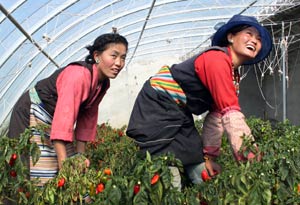
"I am not good at big numbers. I only know I can now buy things we couldn't afford and I can now eat vegetables that we didn't have," said Tashi Dorboge, a 44-year-old resident in Ngari's Zanda county. Potato and eggplant were the only vegetables available in winter a decade ago, he said.
As part of the aid program, specialists from Hebei province have been teaching locals how to grow the crops since 2008.
"Without the skills, we couldn't grow vegetables even with the greenhouse built by the government," he said.

Copyright 1995 - . All rights reserved. The content (including but not limited to text, photo, multimedia information, etc) published in this site belongs to China Daily Information Co (CDIC). Without written authorization from CDIC, such content shall not be republished or used in any form. Note: Browsers with 1024*768 or higher resolution are suggested for this site.
License for publishing multimedia online 0108263 Registration Number: 130349