Nuclear Meltdown
Second blast at stricken Japan nuke plant
(Agencies)
Updated: 2011-03-14 13:45
 |
Large Medium Small |
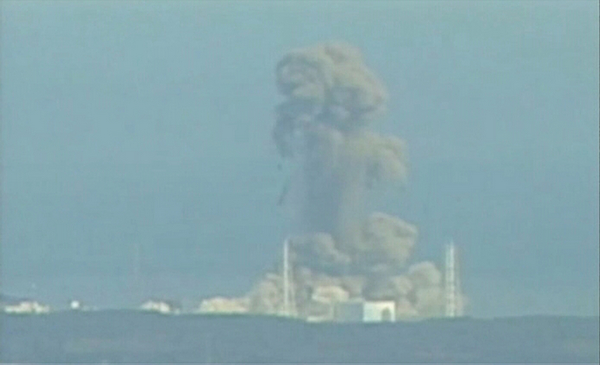 Smoke rises from Fukushima Daiichi nuclear power complex in this still image from video footage March 14, 2011. A fresh explosion at the quake-stricken nuclear power complex on Monday is unlikely to have led to a large escape of radioactivity, the government said. Japanese Chief Cabinet Secretary Yukio Edano was speaking after a hydrogen explosion at the No 3 reactor in the plant, which sent a plume of smoke into the air. [Photo/Agencies] |
SOMA, Japan - The second hydrogen explosion in three days rocked Japan's stricken Fukushima Dai-ichi nuclear plant Monday, sending a massive column of smoke into the air and wounding 6 workers. The plant's operator said radiation levels at the reactor were still within legal limits.
The explosion at the plant's Unit 3, which authorities have been frantically trying to cool following a system failure in the wake of a massive earthquake and tsunami, triggered an order for hundreds of people to stay indoors, said Chief Cabinet Secretary Yukio Edano.
|
||||


The blast follows a similar explosion Saturday that took place at the plant's Unit 1, which injured four workers and caused mass-evacuations.
Japan's nuclear safety agency said 6 workers were injured in Monday's explosion but it was not immediately clear how, or whether they were exposed to radiation. They were all conscious, said the agency's Ryohei Shomi.
The reactor's inner containment vessel holding nuclear rods was intact, Edano said, allaying some fears of the risk to the environment and public. TV footage of the building housing the reactor appeared to show similar damage to Monday's blast, with outer walls shorn off, leaving only a skeletal frame.
More than 180,000 people have evacuated the area in recent days, and up to 160 may have been exposed to radiation.
Earlier Monday, pressure had jumped inside Unit 3, forcing the evacuation of 21 workers. But they returned to work after levels appeared to ease.
Associated Press journalists felt the explosion in the tsunami-devastated port town of Soma, some 25 miles (40 kilometers) north of the reactor. They reported feeling the faint rumble of a blast and the ground shaking.
Four nuclear plants in northeastern Japan have reported damage, but the danger was greatest at Fukushima's Dai-ichi plant. Operators have lost the ability to cool three reactors at Dai-ichi and three more at another nearby complex using usual procedures, after the quake knocked out power and the tsunami swamped backup generators.
Operators have been dumping seawater into units 1 and 3 in a last-ditch measure to cool the reactors. They were getting water into the other four reactors with cooling problems without resorting to corrosive sea water, which likely makes the reactors unusable.
| 分享按鈕 |