Unilateral probe of China's trade could hurt both Washington, Beijing


WASHINGTON - US Trade Representative (USTR) Robert Lighthizer on Friday formally launched a Section 301 investigation into alleged intellectual property practices by China under a rarely used 1974 trade law, triggering concerns that Washington may unilaterally impose restrictions that would eventually hurt both countries.
"The investigation will seek to determine whether acts, policies, and practices of the Government of China related to technology transfer, intellectual property, and innovation are unreasonable or discriminatory and burden or restrict US commerce," the USTR's Office said in a statement.
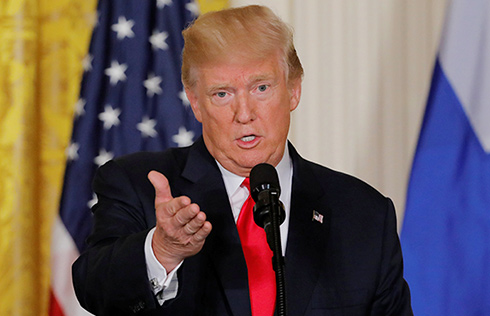
The move comes after US President Donald Trump on Monday signed an executive memorandum directing Lighthizer to consider the possible initiation of an investigation, signaling his administration's tough trade stance against China.
Section 301, once heavily used in the 1980s and the early 1990s, allows the US president to unilaterally impose tariffs or other trade restrictions on foreign countries. But the United States has rarely used the outdated trade tool since the World Trade Organization came into being in 1995.
"The 301 toolkit was retired for good reason. Bringing it back in 2017 is likely to be more deeply problematic to more firms in more places than many might expect," said Deborah Elms, founder and executive director of the Asian Trade Centre based in Singapore.
"It became no longer necessary really for the United States that they have to use that law, because now we have an effective dispute settlement system under the WTO," Chad Bown, a trade expert and senior fellow at the Washington D.C.-based Peterson Institute for International Economics (PIIE), told Xinhua in a recent interview.
Meanwhile, the global trading community had become increasingly concerned about the use of Section 301 as the US government "acts as police force, prosecutor, jury and judge" in the process, Bown argued. He recommended Washington and Beijing resolve trade disputes through the WTO.
If Lighthizer did decide to go ahead with the Section 301 investigation, the United States would first consult with China and the investigation process could take as long as a year, senior administration officials told reporters last week.
Jeffrey Schott, another trade expert at the PIIE, told Xinhua that the purpose of the investigation is "to find out what the facts are and to use the process of investigation to expand bilateral consultations with China" so that there is a better understanding of each country's practices.