Documentary in Japan reveals dark history of 'poison gas island'


 |
|
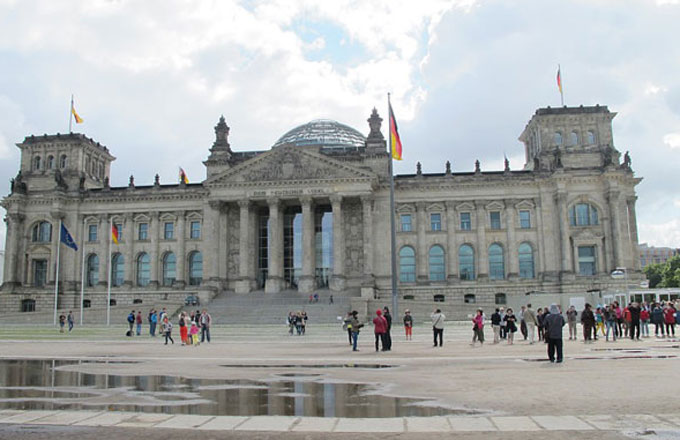
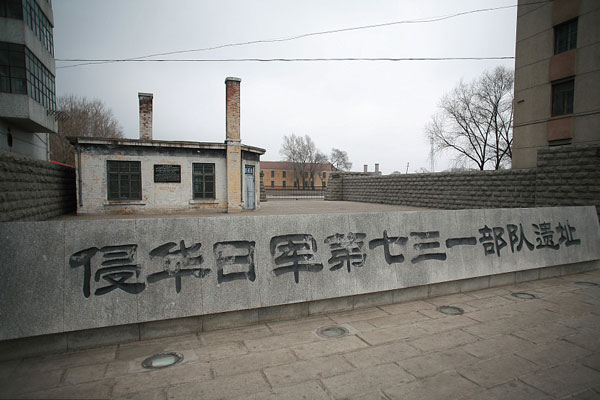
The exhibition hall of evidences of crime commited by Unit 731 of the Japanese Imperial Army in Harbin, Heilongjiang province, file photo. [Photo/VCG] |
TOKYO - A documentary released recently about Okunoshima, an island where poison gas used to be manufactured for Japan's invasive war against China, has attracted a great deal of attention.
The documentary broadcast by Tokyo Broadcasting System , together with another one about Japanese Unit 731 released earlier by public broadcaster NHK, revealed the irrefutable historical truth about Japan's war crimes, and prompted heated discussions among Japanese society.
Okunoshima is a small island located in the Seto Inland Sea of Japan in Hiroshima prefecture. The island served as a poison gas factory for much of the chemical warfare that was carried out by the Imperial Japanese Army in China during World War II.
The documentary features Haruka Ayase, a 32-year-old popular idol in Japan, visiting Okunoshima island, interviewing 91-year-old Yasuma Fujimoto and others about the past of the island.
In the 1940s, Yasuma Fujimoto was involved in the manufacturing of poison gas at a plant on the island and the gas was eventually used, among other heinous acts of aggression, against China.
"This island now appears green. But it used to look yellow," said Fujimoto, adding that trees could not grow there due to the acid in the poison gas.
Back then, 6,700 people were working on the island and manufacturing poison gas around the clock. Fujimoto could still remember the chemical equation for the poison gas Lewisite to be manufactured.
"The poison gas was manufactured to secure Japan a victory in its invasive war against China," said Fujimoto.
"I will never forget this chemical equation. I went to learn these things to earn a living, but I ended up making poison gas to kill the Chinese people. I'm a criminal," he added.
Numerous Chinese civilians were killed by the chemical weapons used by the invading Japanese army. One such example was a Japanese gas attack at an underpass in Beituan Village, Hebei Province in China in 1942. Some 1,000 villagers were killed in that attack.
But after the war, as the Japanese government was eager to cover up the atrocities, evidence was destroyed, so was the poison gas factory on the Okunoshima island.
Currently, the island has become a tourist spot with more than 700 wild rabbits living there, and is therefore also called Rabbit Island.
The past crimes seem to only exist in the memory of a handful of witnesses who are still alive, such as Fujimoto.
"I made poison gas which killed Chinese people. This is a fact that can never be denied or distorted," said Fujimoto.