Why climate change top G20 economic issue: UN expert
Comments Print Mail Large Medium SmallHe said climate is another case in point, with the ongoing international negotiations placing considerable emphasis on the question of how much developed countries will finance developing countries'efforts to reduce carbon emissions, and the costs of communities'and economies' adaptation to climate change.
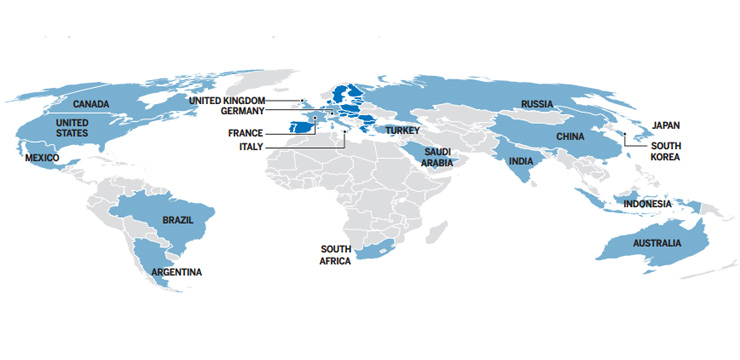
"The G20's focus this year on the challenge of financing long- term infrastructure needs of an estimated 5 trillion U.S. dollars annually worldwide has profound environmental dimensions," he said.
"Building energy efficient and climate resilient cities will be a defining feature of their future utility, both to their residents and to the global community."
Steiner said investing in agricultural systems that can remain productive in the face of changing and increasingly volatile weather patterns will be the basis for securing adequate, affordable, healthy food for tomorrow's growing global population.
"Environment is not just a matter for environmental ministers and policies," he said.
"Growing numbers of financial regulators and central bankers are responding to the simple facts that the working of the financial system has environmental impacts, and that the state of the natural environment impacts the health and--ultimately--the stability of the financial system."
He said Brazil's central bank has a host of environmental regulations, and the China Banking Regulatory Commission's Green Credit Guidelines provide increasingly stringent directions regarding environmental risk management.
Steiner said while central banks today remain dubious that climate represents a systemic risk to the financial system, the Prudential Regulatory Authority of the Bank of England has recently commenced a review of the relationship between insurance regulation and climate change.
He said G20 leaders should consider three practical steps that would help progress such a development.
The first could be to request the Financial Stability Board ( FSB) to consider for the first time environmental aspects of financial stability.
Second could be to encourage the environmental stress testing of key financial market policies.
And a third step could be to explore the potential for greening the use of central banks' asset-purchasing activities.
"A healthy financial system is a keystone of an inclusive and sustainable global economy. Such a system must nurture and invest in the key drivers of its economy, which crucially include a supportive natural environment," Steiner said.
"The G20 is well-placed to focus on this nexus, and in so doing to further its mandate of securing a sustainable financial system, " he added.
Related Stories
British PM joins world leaders for Australia's G20 summit 2014-11-14 09:34
Eggs, reptiles and surfboards banned for G20 2014-11-14 08:08
G20 expected to OK anti-graft deal 2014-11-14 08:06
China expects G20 summit to achieve results in four areas 2014-11-13 18:11
Anti-corruption an agenda for G20 summit 2014-11-13 17:07
Police gear up ahead of G20 summit in Brisbane 2014-11-13 15:38
G20 to focus on economic growth, not climate change 2014-11-13 14:09
IMF calls on G20 to boost growth 2014-11-13 10:28
Background