
FTA agenda for APEC economic leaders
Updated: 2014-04-03 07:55
By Tang Guoqiang and Wang Zhenyu (China Daily)
|
||||||||||


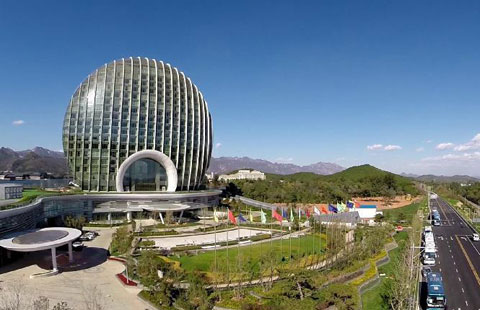
China is hosting the 22nd APEC Economic Leaders' Meeting. The theme of the meeting will be "shaping the future through Asia-Pacific partnership" and one of the three topics will be "advancing Asia-Pacific regional economic integration".
This topic is especially important, as this year marks the 20th anniversary of the Asia-Pacific Economic Cooperation's Bogor Goals. There are only six years left to achieve these goals, but while all parties should remain committed to them, it is important to start thinking about APEC's agenda in the next 10 to 15 years, especially in regard to tailoring a new regional trade arrangement for the Asia-Pacific. Indeed, thinking about the post-Bogor Goals agenda will give impetus to achieving the Bogor Goals.
More importantly, APEC needs to champion the building of regional economic institutions. APEC should promote sound interactions between competitive mechanisms in an open, inclusive, cooperative, win-win, transparent and flexible manner.
When APEC was founded 25 years ago, there were only three cooperation forums and three free trade agreements in the Asia-Pacific region. Now there are 25 cooperation mechanisms and 56 FTAs. The trend is for the merging of smaller bilateral, sub-regional, or plurilateral FTAs into mega-FTAs, such as the Trans-Pacific Partnership, the Regional Comprehensive Economic Partnership and the Pacific Alliance.
But this development not only offers hope of greater integration, it also creates the anxiety of divisions. Both the Trans-Pacific Partnership and Regional Comprehensive Economic Partnership are under negotiation with set timetables, the former without China involved and the latter without the United States.
Given their overlapping memberships, the Trans-Pacific Partnership and the Regional Comprehensive Economic Partnership are actually complementary to each other. And they both have the same ultimate objective of economic integration at a higher level and in a greater scope. They may not completely converge but may well co-exist to satisfy the needs of various economies. There are also smaller FTAs shared by these two mega-FTAs and in these areas attempts should be made to harmonize the rules.
In this connection, it may be possible to create and launch an FTA information exchange mechanism to facilitate communication and interaction between the Trans-Pacific Partnership and the Regional Comprehensive Economic Partnership and other free trade agreements, for them to learn from, promote, converge with and complement each other.