China proposes GMS economic cooperation
Updated: 2011-12-20 20:31
(Xinhua)
|
|||||||||||


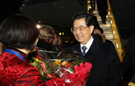
NAY PYI TAW - Chinese State Councilor Dai Bingguo put forward a five-point proposal Tuesday on economic cooperation in the Greater Mekong Subregion.
Addressing the 4th Summit of the six-country Greater Mekong Subregion Economic Cooperation (GMS) group, Dai lauded the GMS's remarkable progress in the past 20 years in areas such as infrastructure development, trade facilitation and environmental protection.
In the face of uncertainties in the global economy, Dai urged the GMS countries to enhance competitiveness through greater connectivity, stressing that advancing economic integration and sustainable development should be the priority.
As his first point, Dai highlighted the importance of engaging in comprehensive and multi-tiered cooperation on connectivity.
Such cooperation would include accelerating the building of transport corridors and establishing well-connected highway and railway networks at an early date; formulating a medium- and long-term development plan to improve international shipping on the Lancang-Mekong River; promoting the building and use of the GMS Information Superhighway; and promoting the development of power projects in the subregion.
Second, the six countries should promote transport and trade facilitation and boost the development of economic corridors.
"Building industrial parks should be identified as a priority in the future development of the economic corridors," Dai said, adding the Chinese government would encourage participation by well-established Chinese enterprises.
Third, GMS economies must boost cooperation in environmental protection, agriculture, science and technology and human resources training.
Dai said quality safety standards for GMS agricultural produce should be unified at a faster pace, and the GMS Agricultural Information Network should also be further improved.
"China will support other GMS countries on a priority basis when we implement the China-ASEAN Science and Technology Partnership Program, and enhance transfer of technologies to those countries in such areas as new energy, renewable energy and agriculture," Dai said.
He also said that, in the coming three years, China would provide training to 1,500 people from other GMS countries in various sectors.
Fourth, GMS countries should enhance capacities for mobilizing resources for GMS cooperation.
Dai suggested the Asia Development Bank (ADB) scale up input, actively expand financing channels, and mobilize support from more development partners. China would donate $20 million to renew the PRC Regional Cooperation and Poverty Reduction Fund in the ADB.
As the fifth point, the Chinese state councilor called on the local governments and the private sectors of GMS countries to actively participate in GMS cooperation.
The new GMS 10-Year Strategic Framework (2012-2022), which was agreed at this summit, should be implemented in the context of the economic and social development plans of local governments of the GMS countries, Dai said.
"Governments at all levels in GMS countries need to make their regulations and policies more transparent and protect the legitimate rights and interests of enterprises," Dai said.
In addition, the GMS countries needed to make the most of the GMS Business Forum and provide a full range of services to enterprises, covering human resources, capital, information and resources.
The Chinese government would continue to support Yunnan and Guangxi provinces in participating in GMS economic cooperation, Dai said.
With the theme "Beyond 2012: Towards a New Decade of GMS Strategic Development Partnership," the summit focused on ways to enhance resource mobilization in the next decade and to promote participation of all stakeholders, including the private sector, to effectively implement the new Strategic Framework.
Representatives of the six countries sharing the Mekong River -- Cambodia, China, Laos, Myanmar, Thailand and Vietnam -- endorsed a joint declaration, the Nay Pyi Taw Declaration, and signed the new 10-year Strategic Framework.
The GMS was formed in 1992, with the Asian Development Bank as its coordinator, financing bank and technical supporter.






Hot Topics
HIV/AIDS, Egypt protest, Thanksgiving, climate change, global economic recovery, home prices, high-speed railways, school bus safety, Libya situation, Weekly photos
Editor's Picks

|

|

|

|
|

|