Science and Health
UN chief calls for global action to end AIDS
(Agencies)
Updated: 2011-06-09 11:23
 |
Large Medium Small |
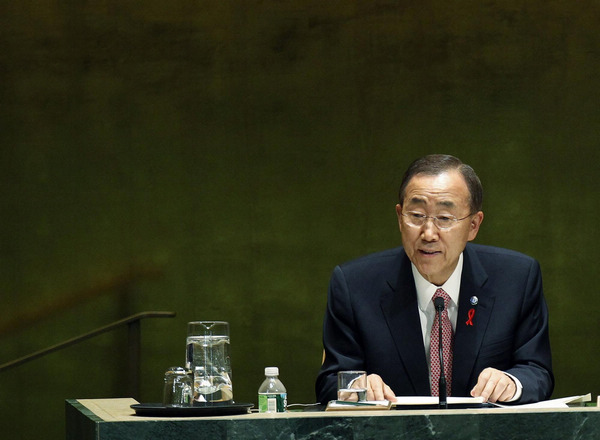 United Nations Secretary General Ban Ki-moon addresses diplomats at the 2011 High Level Meeting on AIDS at the UN General Assembly in the UN Headquarters in New York June 8, 2011. [Photo/Agencies]
|
UNITED NATIONS - Secretary-General Ban Ki-moon called for global action Wednesday to put an end to AIDS by 2020 and relegate the killer disease to the history books.
Opening a three-day General Assembly meeting to assess progress in combatting HIV/AIDS, the UN chief told presidents, ministers and diplomats from across the globe that if all partners involved in the fight unite "as never before" the goal can be met.
"Today, we gather to end AIDS," the secretary-general said. "That is our goal - zero new infections, zero stigma and zero AIDS-related deaths."
Michel Sidibe, executive director of the United Nations AIDS agency, told the leaders that the vision of an AIDS-free world can be realized.
However, he said it will require revolutionizing HIV prevention and the mobilization of young people "as agents of change" in reducing treatment costs. It will also require ending discrimination and providing lifesaving services to the groups most affected - migrants, prisoners, people who inject drugs, sex workers, and men who have sex with men, he said.
Sidibe said 1.8 million people die of AIDS every year in the developing world and in developed countries AIDS is becoming a chronic disease. He said 9 million people in the world await treatment.
Sidibe urged donors, who have reduced funding for AIDS for the first time in 10 years, to increase their contributions to meet the new goal.
"We cannot stop our investment now," he said. "With an effective up-front investment we can make the down payment to alter the costs trajectory and end this epidemic."
The UNAIDS chief said getting to zero will require new innovations to provide inexpensive diagnostic methods and medication available for everyone, everywhere in five years.
With sustained investment in research and development, he said, "we will have a microbicide that women can use to protect themselves from HIV and we will have a vaccine that will eradicate this virus."
According to new research by UNAIDS, an additional $6 billion will be needed every year by 2015 to help avert 12 million new infections and more than seven million deaths by 2020.
Sharonann Lynch of Doctors Without Borders said "the world needs an ambitious treatment target with a plan attached to make it a reality - because it will be meaningless if countries aren't willing to come up with the cash and actions needed to break the back of the epidemic."
Nigeria's President Goodluck Jonathan said his country has been fighting the spread of HIV/AIDS in part by working with the local film industry to promote behavioral change and awareness among the young. And he has a bill in parliament that seeks to fight discrimination against infected people, he said.
Still, Jonathan said, getting necessary anti-retroviral medication to the 1.5 million Nigerians who need it remains a challenge, as does promoting prevention of the virus' transmission from mothers to children.
"To say that adequate funding is critical to the success of our HIV and AIDS response is an understatement," Jonathan said. "We cannot win the fight against the HIV/AIDS scourge without international solidarity."
Prime Minister Denzil Douglas of St. Kitts and Nevis, speaking on behalf of the Caribbean Community which remains the region second only to sub-Saharan Africa with the highest HIV prevalence rate, cited a 14 percent decline in new HIV infections and a 43 percent decline in AIDS-related deaths over the past decade.
He warned that without long-term and sustainable financing, "reversal of the marginal gains over the past 10 years is inevitable."
| 分享按鈕 |