Asia-Pacific
Japan detects radioactivity 30 km off coast
(Agencies)
Updated: 2011-03-25 06:30
 |
Large Medium Small |
|
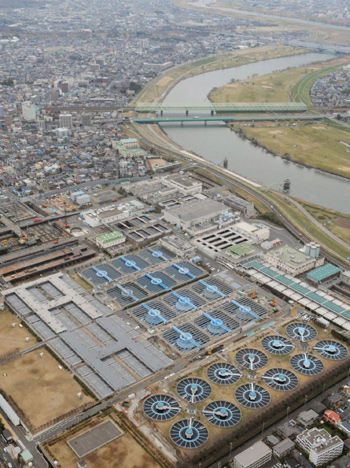 A water purification plant is pictured in Tokyo March 23, 2011.??[Photo/Agencies] |
VIENNA - Japanese scientists have found measurable concentrations of radioactive iodine-131 and caesium-137 in seawater samples taken 30 km (18 miles) from land, the UN nuclear watchdog said on Thursday.
"The iodine concentrations were at or above Japanese regulatory limits, and the caesium levels were well below those limits," the International Atomic Energy Agency (IAEA) said.
Japanese authorities had given the Vienna-based agency data on samples collected on March 22-23, after detecting iodine and caesium in the water near the crippled Fukushima Daiichi nuclear power plant, it said in a statement.
"The IAEA's Marine Environmental Laboratory in Monaco has received the data for review," the IAEA said.
In a desperate attempt to cool the reactors and their spent fuel ponds, workers have sprayed or dumped seawater into the plant. Officials have acknowledged that some of the water spilled back to sea.
Japanese authorities tested seawater off the plant's site for radiation earlier this week but stressed that elevated levels already detected were no cause for concern.
The IAEA said a vessel from Japan's Agency for Marine-Earth Science and Technology had "collected water samples at several points 30 km from the coastline and found measurable concentrations of iodine-131 and caesium-137".
It also said three workers at the plant had been exposed to "elevated levels" of radiation, giving details about an incident reported earlier on Thursday in Japan.?
"The three were working in the turbine building of reactor Unit 3 and have received a radiation dose in the range of 170-180 millisieverts," it said, adding two of them were taken to hospital for treatment for "severely contaminated feet".
"The workers had been working for about three hours in contact with contaminated water," the IAEA statement said.
The average dose for a nuclear plant worker is 50 millisieverts over five years. The operator of Fukushima said last week it had raised the limit for the emergency work to 100 millisieverts an hour.
| 分享按鈕 |