WORLD> Global General

|
WORLD> Global General
|
|
Temperature rise may trigger West Antarctic thaw
(Agencies)
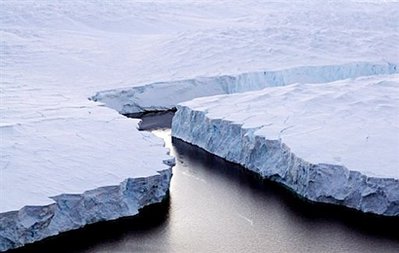
Updated: 2009-03-19 11:38 OSLO -- The West Antarctic ice sheet may start to collapse if sea temperatures rise by 5 degrees Celsius (9 degrees Fahrenheit), triggering a thaw that would raise world ocean levels by 5 meters (16 ft), US scientists said. Such a rise in sea levels -- taking thousands of years -- would swamp many coasts and cities and wipe some low-lying Pacific islands off the map.
West Antarctica, the part of the frozen continent most vulnerable to climate change, has thawed several times in the past few million years, most recently 400,000 years ago, according to Thursday's edition of the journal Nature. The study "suggests the Western Antarctic ice sheet will begin to collapse when nearby ocean temperatures warm by roughly 5 C," David Pollard of Pennsylvania State University and Robert DeConto of the University of Massachusetts wrote.
Pollard told Reuters the 5 C estimate for triggering a collapse was a rough guide, based on an computer model. The bigger East Antarctic ice sheet had not thawed in past warm periods studied. The UN Climate Panel has projected a best estimate that world atmospheric temperature will rise by between 1.8 and 4.0 Celsius by 2100 because of emissions of greenhouse gases that could bring floods, droughts, heatwaves and more powerful storms. Higher rises were possible unless the world reined in the growth of emissions, it said. Oceans temperatures lag far behind the rise in air temperatures. "The required ocean warmings, of the order of 5 Celsius, may well take several centuries to develop," wrote Philippe Huybrechts of Vrije University in Brussels in a commentary. "But such an outcome could result from the accumulation of total greenhouse-gas emissions projected for the twenty-first century, if emissions are not greatly reduced," he wrote. A related paper in Nature suggested that past collapses of the West Antarctic ice were linked to the earth's rotation. "The pattern of collapse suggests an influence of 40,000-year cycles in the tilt of Earth's rotational axis," Nature said of the study led by scientists in New Zealand. |