WORLD> Middle East

|
WORLD> Middle East
|
|
Couple scarred in Egytian illegal organ trade
(Agencies)
Updated: 2009-03-18 10:36 CAIRO -- The poverty of Cairo's slums forced a young couple to sell nearly everything they had. When that wasn't enough, each of them sold a kidney.
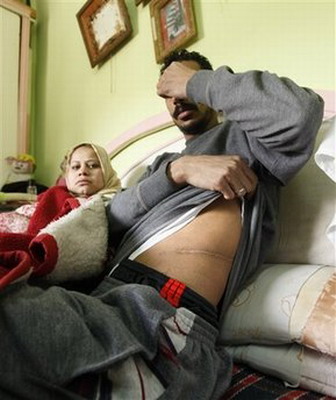
The clandestine pre-dawn operation in a small private hospital ended with the man and wife being dumped semiconscious in taxis, the payment for their kidneys tucked into their clothes, they say. Now, a year later, penniless once more, they are too weak to even move around their apartment. Unable to afford follow-up care, their health is so fragile they spend much of the day in bed in a dark room. "If anyone had made clear to me the danger, I wouldn't have done it," said Abdel-Rahman Abdel-Aziz, gaunt and looking older than his 24 years as he lay in bed beside his wife. He pulled up his sweatshirt to show the scar from the operation. For years, word has spread among Egypt's destitute that selling a kidney, sometimes for as little as $2,000, can be a quick way out of a debt or to keep from sinking deeper into poverty. At rundown cafes, they are hunted by middlemen working for labs that match donors and recipients, many of whom are foreigners drawn to Egypt's thriving, underground organ trade. Egypt is one of a half dozen countries identified by the World Health Organization as organ-trafficking hot spots. Under international pressure, other trouble spots like Pakistan and the Philippines have outlawed organ sales and barred foreigners from undergoing transplants to stop "transplant tourism." Egypt, however, has long ignored the problem, experts say. Transplant surgeons working to stop the global trade fear that foreign patients finding it harder to go to Asia could flood into Egypt in search of organs. Egyptian officials are finally showing signs of action. One key problem has been that Egypt does not have a law regulating transplants, only weak doctors union rules that bar sales but are largely self-policing and ignored. Now, a draft law is expected to be put before parliament in the next few months. The law would ban the sale of organs, prohibit transplants to foreigners, restrict the operations to public hospitals and impose sentences of up to 15 years in prison and $180,000 fines for violations. At the same time, Egypt's Health Ministry has begun cracking down. In recent months, authorities closed two private medical centers in Cairo and arrested doctors, middlemen and lab workers for violating doctors union rules or other charges, said ministry spokesman Abdel-Rahman Shaheen. "They work after midnight," he said. "They do these operations in fact in hospitals that have no facilities to do a major operation like this. They were all closed, and they were all arrested." "We must admit that we do have a problem with organ transplants," Shaheen said. Crucially, the draft law also allows deceased donations, limiting the need for living donors. Past attempts at legislation have failed partly because of religious and cultural resistance to taking organs from the dead, though many other Muslim countries allow deceased donation. |