WORLD> Africa

|
WORLD> Africa
|
|
S. Africa plans to step up its AIDS battle
(Agencies)
Updated: 2009-02-11 09:53 CAPE TOWN, South Africa -- South Africa's health minister on Tuesday promised a dramatic increase in treatment for AIDS victims to overcome the legacy of a decade of governmental denial of the epidemic.
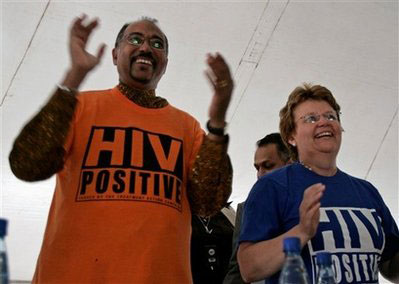
Barbara Hogan said the government wanted to provide AIDS drugs to 1.5 million people over the next three years -- up from 700,000 at present, conceding that thousands were without the treatment they desperately need. South Africa has an estimated 5.7 million people infected with HIV -- the most of any country in the world -- and nearly 1,000 people die every day of AIDS-related diseases. But former President Thabo Mbeki and his health minister downplayed the crisis. When Hogan was appointed in September, she immediately broke with the discredited policies of her predecessor who promoted garlic and lemons rather than conventional AIDS drugs. In scenes unthinkable six months ago, AIDS activists who have filed repeated legal suits to force Mbeki to provide AIDS drugs serenaded Hogan with songs and a hospital choir outside an AIDS clinic in the township of Khayelitsha. Hogan -- a grandmotherly figure who was imprisoned during apartheid and who wore a "HIV positive" T-shirt as a show of solidarity on Tuesday -- said it was "music to my ears." The ceremony in the sprawling township was held to mark the first foreign visit of Michel Sidibe, the new head of the United Nations' AIDS program. The township of half a million people is crime-infested and disease-ridden. More than 30 percent of its pregnant women have HIV -- the virus which causes AIDS. More than 6,200 cases of tuberculosis -- which feeds off AIDS -- were diagnosed last year, more than for the whole of the United Kingdom. But Khayelitsha also has become a standard bearer for pioneering health care. The charity Medecins Sans Frontieres, working with local authorities, is providing AIDS medication to more than 10,000 people. Most pregnant women are tested for the virus and receive drugs to prevent them passing on the virus to their unborn child, slashing the rate of mother to child transmission to less than 3.5 percent -- the lowest in the country. More than 1 million free condoms are issued every month in health centers and bars. TB cure rates are among the highest in the country. "I will try to learn from you. I will listen to you because you are the one who is leading the fight," said Sidibe, who hails from Mali. He pledged to bring the Geneva-based UNAIDS agency closer to victims of the epidemic. Hogan likened the township to Johannesburg's Soweto, heartland of the anti-apartheid struggle. "Khayelitsha has been the battleground of the fight against HIV and AIDS and of the fight against people who wanted to deny it was a serious issue," Hogan said. "I salute you." Since 1996 life, expectancy in South Africa has fallen by 12 years, maternal mortality is higher than in Iraq, and three times more children under five die than in Brazil. Sidibe, who took over as head of UNAIDS last month, said much greater community mobilization like in Khayelitsha was key to slowing the spread of the AIDS virus. It has infected an estimated 33 million people worldwide, most of them in sub-Saharan Africa. The number of new infections outstrips the number of people put on treatment. Until this trend can be reversed, countries will have to spend ever-increasing resources on AIDS drugs to keep people alive. Sidibe appealed to donor governments not to be sidetracked by the global economic woes and to come up with the estimated $25 billion per year needed to fight the epidemic. "We cannot let the economic crisis paralyze us," said Sidibe. "Stimulus packages and economic adjustments should be made with a human face in mind. "A mother should not have to choose between continuing AIDS treatment and feeding her children. We cannot let down the 4 million people on treatment and millions more in need today." |