WORLD> Global General

|
WORLD> Global General
|
|
Mammoth task: Scientists map DNA of ancient beast
(Agencies)
Updated: 2008-11-20 10:08 WASHINGTON – Bringing "Jurassic Park" one step closer to reality, scientists have deciphered much of the genetic code of the woolly mammoth, a feat they say could allow them to recreate the shaggy, prehistoric beast in as little as a decade or two. The project marks the first time researchers have spelled out the DNA of an extinct species, and it raised the possibility that other ancient animals such as mastodons and sabertooth tigers might someday walk the Earth again.
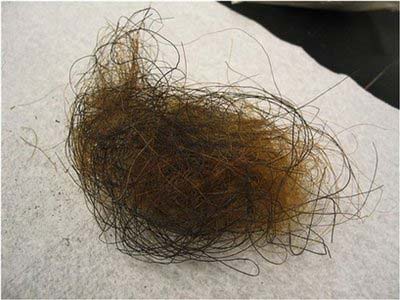
"It could be done. The question is, just because we might be able to do it one day, should we do it?" asked Stephan Schuster, a Penn State University biochemist and co-author of the new research. "I would be surprised to see if it would take more than 10 or 20 years to do it." The million-dollar mammoth study resulted in a first draft of the animal's genome, detailing the ice age creature's more than 3 billion DNA building blocks. The research published in Thursday's issue of the journal Nature also gives scientists new clues about evolution and extinction. "This is an amazing achievement," said Alex Greenwood, an Old Dominion University biology professor who studies ancient DNA and was not involved in the mammoth research. Full-sized mammoths, about 8 to 14 feet tall like elephants, became extinct around 10,000 years ago. To obtain the DNA, scientists relied on 20 balls of mammoth hair found frozen in the Siberian permafrost. That technique — along with major improvements in genome sequencing and the still-emerging field of synthetic biology — is helping biologists envision a science-fiction future. Past efforts to analyze ancient DNA often used material extracted from fossilized bones, which frequently became contaminated with bacteria, viruses and parasites over thousands of years. For example, efforts to study Neanderthal DNA have been hampered because only about 6 percent of the recovered genetic material actually belonged to our ancient cousins. The new study, which is about 80 percent complete, provides a letter-by-letter genetic code mapping out most of the mammoth's DNA. Think of it as an instruction sheet on how to build a mammoth. Scientists don't yet know how to do that, but experts say eventually they will. Schuster said researchers should someday be able to recreate any extinct creature that lived within the last 100,000 years as long as it got trapped in permafrost and had hair. That leaves out the Jurassic period, the time of dinosaurs, from about 140 million to 200 million years ago. So Earth's real-life sequel to extinction is far more likely to be "Ice Age 3" than "Jurassic Park IV." Three years ago, Japanese scientists said they hoped to find frozen mammoth sperm and impregnate an elephant and raise the offspring in a safari park in Siberia. But using genetics to engineer a mammoth makes more sense, Schuster said. Anthropology professor Hendrik Poinar of McMaster University in Hamilton, Ontario, said he no longer considers such ideas impossible. Poinar, who wasn't part of Schuster's study but consulted on the movie "Jurassic Park," said director Steven Spielberg may have had it right when he told skeptical scientists: "This is the science of eventuality." There are two possible ways to use this new genetic map to make a mammoth, and both involve creating a mammoth embryo and implanting it into its elephant cousin. Both methods are incredibly complex and rely on intricate genetic manipulation because the mammoth DNA is not suitable for cloning. One approach requires scientists to start with an elephant cell and genetically engineer it to match the DNA code of a mammoth. The other method involves synthetic biology in which scientists would create life forms from scratch. Once this technique is developed — and leaders in the field say it is just three to 10 years away — scientists would follow the mammoth recipe to build a mammoth cell. An easier option would be to examine what makes the mammoth different from its closest cousin, the African elephant, and create a hairy hybrid to sit in zoos. "People would like to see a hairy elephant," said George Church, director of computational genomics at Harvard Medical School. The more practical side of the research is to better illustrate the evolutionary differences between mammoths and elephants and even humans and chimps, said Church, who was not part of the study. Elephants and mammoths diverged along evolutionary paths about 6 million years ago, about the same time humans and chimps did, Schuster said. But there are twice as many differences between the genetic makeup of chimps and humans as those between elephants and mammoths. "Primates evolved twice as fast as elephants," Schuster said. But some animals such as rodents have had even more evolutionary changes, indicating that their development might have to do with size or metabolism, said study co-author Webb Miller. Another interesting finding: In the 50 or so species with mostly mapped genomes, there are certain areas where the genetic code is exactly the same in all the animals — except the mammoth. In other animals, these proteins "stayed the same for a very long time," said Miller, professor of biology and computer science at Penn State. "I don't know what it means. All I did was find them." Miller and Schuster noticed that most of the mammoths they examined had far less genetic diversity than other species still alive, and that may also give a clue to the biology of extinction. So the two are also applying what they learned from the Siberian behemoth to their other efforts to help save Australia's endangered Tasmanian devil, which has the same lack of genetic diversity. |