WORLD> America

|
WORLD> America
|
|
US confronts possibility of long, deep recession
(Agencies)
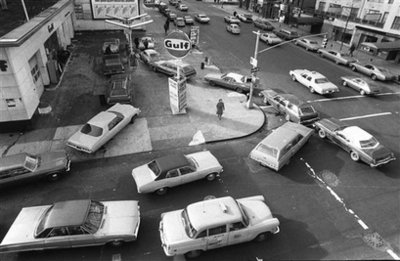
Updated: 2008-10-16 09:05 But in the 1970s, the recession stretched on for a year and a half. Nearly 2.2 million people lost their jobs. By the end of 1974, the Dow Jones industrial average had lost more than 40 percent of its value. At the same time, the nation was focused on the Watergate scandal and the vacuum left by President Nixon's resignation in August 1974. The economy began to recover in spring of the next year. But inflation, which had eased as the oil embargo was lifted, spiked again. By 1980, prices were rising at an annual rate of 13.5 percent. Anxious about a hostage crisis in Iran and the Carter's administration inability to tame inflation, Americans elected Ronald Reagan president. But it wasn't at all clear how his plan to increase defense spending would cure the economy's ills.
Volcker, appointed by Carter to lead the Fed in 1979, took on inflation by sharply raising interest rates. It worked, but made life even more difficult for consumers at a time when the nation was doubtful about its economic future. "That was the feeling at that time: hopelessness, in terms of how do we get out of this situation," said Anthony Campagna, author of "The Economy in the Reagan Years." The next recession did not come until 1990, as preparations for the Gulf War drove up the price of oil. But the 1.6 million jobs lost was much less severe than in the previous downturn, and this one lasted for just eight months. When it recovered, the economy staged its longest expansion on record -- 10 years of growth. The next recession, in early 2001, was similarly short-lived. The number of people out of work rose sharply, but compared with some past recessions, unemployment rate was relatively mild. The fact that the last two recessions were so short, the damage relatively limited and the preceding good times so long has helped many people forget the pain of a more severe economic slump. "We've become a little spoiled, actually," said Todd Knoop, a professor at Iowa's Cornell College and author of "Modern Financial Macroeconomics: Panics, Crashes and Crises." That could make this recession feel particularly intense. Said Jay Bryson, global economist at Wachovia Corp.: "I think no matter how you measure it, this coming recession will be worse than the last one." |