
How to beat online identity fraudsters
Updated: 2008-04-25 07:30
Shopping online has its advantages, but it also comes with its dangers: Internet-related fraud is big business.
While the introduction of chip and PIN technology has driven face-to-face fraud down, criminals are increasingly turning to cyberspace.
Card-not-present fraud - that committed over the phone, over the Internet or by mail order - rose 37 percent last year, according to the figures from APACS, the UK payments association.
That, coupled with overseas fraud, helped to reverse a two-year decline in total fraud losses. They rose 25 percent to 535.2 million pounds in 2007.
It seems many Britons are failing to protect themselves, regularly risking identity theft by being careless with their personal information.
Two-thirds of office workers make private phone calls at their desks and openly disclose personal information, according to a poll by insurer Sheila's Wheels. Almost the same percentage does not keep personal documents secure in the home, another survey by CPP found.
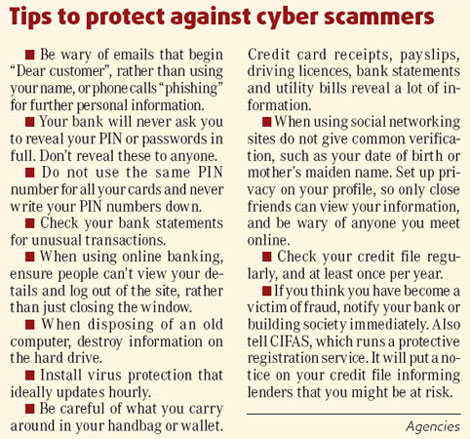
When it comes to the Internet, consumers are also not doing enough to avoid falling victim to scams such as "phishing" - where fraudsters purport to be from banks and building societies and request personal security information.
There were more than 10,000 reported phishing incidents in the first quarter of 2008 up over 200 percent on the same period last year, according to APACS.
Although the number of people either deleting or taking no action when receiving such e-mails rose to 82 percent last year from 75 percent in 2006, almost a fifth of people do not follow these common-sense precautions.
And, although 93 percent of people have anti-virus software on their computers, almost a third have no anti-spyware software.
"The advice is quite simple: just remember that your bank will never send you emails asking you to disclose PIN numbers, login details or complete passwords," says Sandra Quinn, director of communications at APACS.
But as consumers become more aware of phishing, fraudsters are turning their attention elsewhere. The rise of social networking websites - Bebo, Facebook, MySpace and the like - are proving rich pickings.
Agencies
|
||
|
||
|
|
|
|