Scientists make human embryo clones
Updated: 2008-01-17 23:39
 |
|
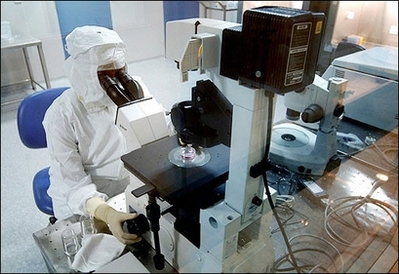
A scientist conducts research on stem cells at a laboratory. Japanese scientist Shinya Yamanaka has said that stem cell technologies could be used to cure diseases and heal injuries within 10 years. [File] |
New York -- Scientists in California say they have produced embryos that are clones of two men, a potential step toward developing scientifically valuable stem cells.
The new report documents embryos made with ordinary skin cells. But it's not the first time human cloned embryos have been made. In 2005, for example, scientists in Britain reported using embryonic stem cells to produce a cloned embryo. It matured enough to produce stem cells, but none were extracted.
Stem cells weren't produced by the new embryos either, and because of that, experts reacted coolly to the research.
"I found it difficult to determine what was substantially new," said Doug Melton of the Harvard Stem Cell Institute. He said the "next big advance will be to create a human embryonic stem cell line" from cloned embryos. "This has yet to be achieved."
Dr. George Daley of the Harvard institute and Children's Hospital Boston called the new report interesting but agreed that "the real splash" will be when somebody creates stem cell lines from cloned human embryos.
"It's only a matter of time before some group succeeds," Daley said.
Korean scientist Hwang Woo-suk claimed a few years ago that he'd created such cell lines, but that turned out to be a fraud.
Dr. Samuel Wood, a co-author of the new paper and chief executive of Stemagen Corp. of La Jolla, Calif., said he and his colleagues are now attempting to produce stem cell lines from the embryos.
The work was published online Thursday by the journal Stem Cells.
Scientists say stem cells from cloned embryos could provide a valuable tool for studying diseases, screening drugs and, perhaps someday, creating transplant material to treat conditions like diabetes and Parkinson's disease.
But critics raise objections. The process "involves creating human lives in the laboratory solely to destroy them for alleged benefit to others," said Richard Doerflinger, spokesman for the US Conference of Catholic Bishops.
Citing the earlier work in Britain, he also said that as a scientific advancement, the new work was "very limited."
Other objections to cloning include concerns about health risks and exploitation if large numbers of women are asked to provide eggs.
Those objections are one reason that an alternative route to stem cells made headlines last November. Scientists reported a relatively simple way to turn skin cells directly into stem cells. This direct reprogramming carries a theoretical risk of cancer for the recipients of tissue from these cells, however, and many scientists have urged that work continue on the cloning technique as well.
The cloning approach involves inserting DNA from a person into an egg, and then growing the egg into an embryo about five days old before extracting the stem cells. At that stage, the embryo is a sphere of about 150 cells.
In the new work, researchers took skin cells from Wood and another volunteer and produced three embryos with DNA matching the men's. Further DNA testing on one of these embryos strengthened the case that it was a clone, researchers said.
|
|
|
||
|
||
|
|
|
|