BOGOTA, Colombia - Colombia's last major paramilitary chief, who spent a
decade fighting leftist rebels in the jungle, on Tuesday demobilized his men and
handed over his weapons as part of a peace deal with the government.
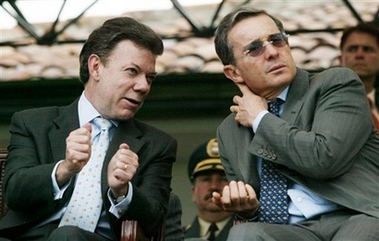
Colombia's President
Alvaro Uribe, right, listens to Colombian Defense Minister Juan Manuel
Santos during a military ceremony to celebrate Army Day in Bogota,
Colombia, Wednesday, Aug. 9, 2006. [AP] |
More than 31,000 paramilitaries have disarmed in exchange for benefits
including reduced prison terms for crimes such as torture and massacres as
President Alvaro Uribe leads a security crackdown to end Colombia's four-decade
conflict.
In a ceremony in the sweltering Choco region, Fredy "The German" Rendon,
leader of the Elmer Cardenas bloc, demobilized his fighters to mark the formal
end of militias created in the 1980s by landowners seeking protection from rebel
attacks.
Colombia's High Commission for Peace said in a statement 745 fighters were
disbanded in Tuesday's ceremony. But officials acknowledge some formerly
demobilized fighters have abandoned the program to create criminal gangs.
"I don't regret the war because circumstances brought us here," Rendon told
Reuters in a weekend interview. "I do regret and feel sorrow for the families of
so many who through our actions were left without brothers, fathers, friends."
Accused of the conflict's worst atrocities, paramilitary leaders negotiated
with Uribe in 2003 to allow them to serve a maximum eight years in prison in
return for handing in arms, confessing to crimes and to compensating victims.
Some had faced sentences of up to 40 years.
Violence and kidnappings have dropped under Uribe as the Washington ally
vowed to crush the guerrillas. But rebels still control parts of rural Colombia,
often seeking to protect the huge cocaine trade they use to help fund their
operations.
Authorities and experts say hundreds of paramilitaries have also regrouped
and recruited new members in parts of the country to traffic drugs, smuggle and
extort.
"By no means is this the end of paramilitarism in Colombia. We are seeing
what is called a third generation of paramilitaries," said German Espejo at
Bogota's Seguridad and Democracia thinktank.
"We are at too early a stage to characterize them. They seem to be less
political and more criminal," he said.
Washington, which has given Colombia billions of dollars to help it fight the
world's biggest cocaine trade, is watching the demobilization closely and says
future aid depends on the government cracking down on human rights abuses.
Rights groups slam Uribe for being too lenient on the "paras" and say he has
ignored militia drug networks. Critics say he must also do more to provide jobs
and training for former fighters to keep them from turning to crime gangs.
In what paramilitary representatives called a blow to the peace process,
Colombia's Constitutional Court three months ago also ruled top militia leaders
who were sentenced before the peace initiative began in 2003 could serve full
jail terms.
Uribe on Monday warned the chiefs to stick to their peace deal or face
extradition to the United States. Militia representatives responded by demanding
more legal guarantees.
"They will threaten and put pressure on the government, but in the end they
will stay in the process and the government will offer them acceptable
conditions," analyst Espejo said.
