 |
|
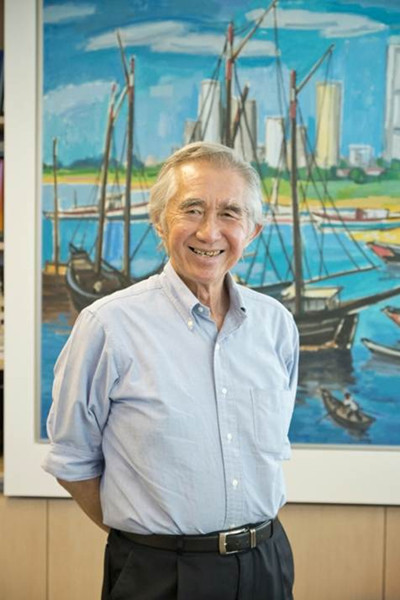
Liu Thai Ker. [Photo provided to China Daily] |
Liu, whom many believe is a humanist at core, has tried to mitigate the effect of gentrification through planning.
"The rich and the poor-they actually need each other. The rich need to hire the poor for various types of work, including household chores. Living close to the rich may encourage the poor-especially children from working-class families-to study hard and work hard."
From the government perspective, one way to avoid this physical separation by wealth is to let public housing share the same piece of land with commercial apartments. And this, Liu says, is exactly what Singapore has been doing.
"In China you face the same problem, only more grave. The situation is aggravated by the need of the local governments to sell land for revenue.
"In any city in China the power of allocating public housing (including low-income housing and low-rent housing) resides simultaneously in many hands. Lack of coordination between departments and bureaus with this power has resulted in chaos, and stands in the way of enhancing social inclusion."
Faced with what he sees as insensitive, cackhanded meddling in his carefully thought-out plans, the soft-spoken Liu is capable of showing a hard edge. He has not been to Guangzhou for the past six or seven years after finding out that the local government had added a big man-made lake right in the center of his design for a piece of land in the city.
"I hate the idea of imposition. A planner must romance with the land."
In a chapter in Challenges and Reforms, Liu details his planning experiences in China. "I've always said that every city has its own forbidden city. By that I mean every city has a part or certain parts deeply rooted in history and should be protected."
For those familiar with Liu's early life, this entrenched view of his has as much to do with him being a planner as with him being an artist.
"However brilliantly built a city may appear, there is one way, and only one way, whereby it can earn the true respect of the world. And it is through art and history," says Liu, who as a young man had wanted to become an artist, following in the footsteps of his late father, but was persuaded by family to pursue architecture instead. Liu once was the chairman of Singapore's National Arts Council.
"Over the past 30 years I have completed projects that cover more than 30 cities in China. From industrial park to eco-city, the priority for planning in China has changed in parallel with the country's political, economic and social evolution."
Since 1988 Liu has acted as a planning adviser to the municipal government of Fuzhou, capital of Fujian province, Liu's ancestral home, and is an honorary citizen of the city.
"If you want to see and experience the real China, go to the second- and third-tier cities and towns, places that have escaped the brutal urbanization of the previous years," he says. "I remember being taken by a friend to different villages to try different wines during a period of stay in France. Variety-that's one thing that only an ancient country has. And China is an ancient country."
"Planning helps to save that variety."
|
|
|
|
|
|
|
|

Copyright 1995 - . All rights reserved. The content (including but not limited to text, photo, multimedia information, etc) published in this site belongs to China Daily Information Co (CDIC). Without written authorization from CDIC, such content shall not be republished or used in any form. Note: Browsers with 1024*768 or higher resolution are suggested for this site.
License for publishing multimedia online 0108263 Registration Number: 20100000002731 





















 Raymond Zhou:
 Pauline D Loh:
 Hot Pot
 Eco China
 China Dream
 China Face