|
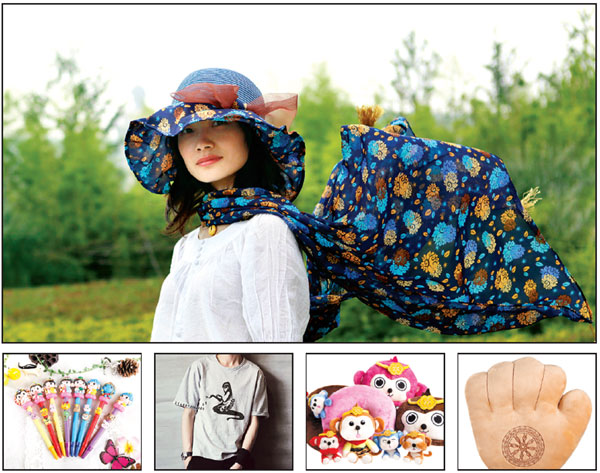
Top: Silk scarves, one of Lingshan's creative souvenirs, are popular among women. Above: Increasingly more Chinese scenic spots are developing their own creative cultural products, such as daily necessities. [Photos provided to China Daily] |
Scenic spots innovate with souvenirs as they reach out to visitors
The 88-meter tall Sakyamuni statue in the Lingshan Buddhist Scenic Area in Wuxi, Jiangsu province, is so impressive that it leaves many a tourist in awe. But for many of them, that thrill is not enough; they want to leave the site with something a little more tangible as a memento of their visit.
For many the answer is souvenirs, and in that regard what can be more tangible or tactile than a cushion in the shape of Buddha's hand or foot?
For other visitors to the area, souvenirs that come in the shape of daily necessities such as mobile phone cases, bookmarks and magnets, all of whose designs take in Lingshan's cultural elements, will serve to bring them happy memories and perhaps even good luck.
Like Lingshan, more and more Chinese scenic spots are developing their own creative cultural products.
"The theme of our creative cultural products is praying for happiness," says Zou Song, manager of business planning for Wuxi Lingshan Scenic Area Operation Co Ltd.
"They symbolize our scenic spot and become tourists' spiritual sustenance. Some are like amulets that will remind travelers to be optimistic about life.
"Chinese traditionally pray for blessings such as health and love when they go to worship Buddha. Tourists also like to share their luck by giving these souvenirs as gifts to families and friends."
It is not uncommon for Buddha's hand to be proffered through ornamental handicrafts, but turning that into cushions is a fresh touch. It also vividly encapsulates the Chinese sayings that one can live longer by touching Buddha's hand and that one can be safe and sound by hugging Buddha's foot.
The merchandise Wuxi Scenic Area Operation produces includes stationery for students, pretty hats and silk scarves with lotus patterns for women and daily necessities for everyone.
The company sells about 4 million tourist souvenirs a year, and the number is rising, Zou says.
"As Chinese travelers are making longer trips they expect the souvenirs they buy to be better than they used to be. They don't want the same old stuff. In many scenic areas selling entry tickets is no longer the main source of revenue; souvenir sales are becoming more important."
Zou looks to Disneyland as a role model in this matter, saying its merchandise includes clothes, snacks and toys, a product line it has been able to refine over the years with innovative ideas and good management.
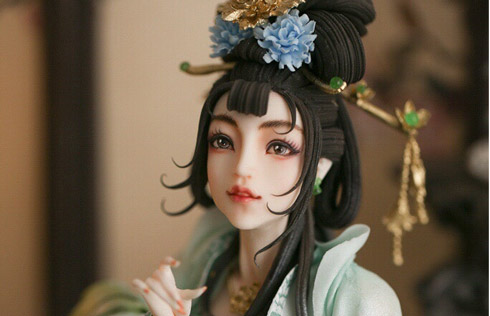
Another scenic spot that has taken the cushion approach to souvenirs is Huaqing Palace in Xi'an, Shaanxi province. The palace was the setting for the love story of Emperor Xuanzong of the Tang Dynasty (AD 618-907) and his concubine Yang Yuhuan. The cushions on offer to visitors include cartoon images of the happy couple, who are also reincarnated in dolls and other products.
"I hope our products can teach tourists something about the palace's history as well as give them memories of a great trip," says Fei Wenjuan, deputy general manager of Shaanxi Huaqing Palace Culture Tourism Co Ltd.
"Those who buy souvenirs appreciate things that are both beautiful and practical, and in which there is a substantial element of local culture."
Guizhou Colorful Guizhou Brand Asset Management brand sells creative products that embody the province's culture.
"One popular product is batik shoes made by Guizhou's ethnic groups," says Ye Cong, executive director of the company.
"They are unique, and for those who usually wear high-heels they offer perfect relaxation for the feet," he says.
"To develop such products, the key is to draw up an inventory of the intellectual property of one's own culture, such as its famous elements and symbols," says Liu Xiaobo, deputy general manager of Beijing BES Cultural Creation Development Co Ltd, which provides services relating to creative cultural products to destinations and scenic spots.
At first it is better to develop two or three categories of products with the core cultural elements at first, he says. That needs little outlay, and it is relatively easy to sell them.
Some scenic spots tend to develop a great range of products, spending a lot in the process but leaving potential customers flummoxed about what to buy. Only when the first batch of products becomes successful, should one develop new ones, he says.
xulin@Chinadaily.com.cn
|
|
|
|
|
|
|
|

Copyright 1995 - . All rights reserved. The content (including but not limited to text, photo, multimedia information, etc) published in this site belongs to China Daily Information Co (CDIC). Without written authorization from CDIC, such content shall not be republished or used in any form. Note: Browsers with 1024*768 or higher resolution are suggested for this site.
License for publishing multimedia online 0108263 Registration Number: 20100000002731 
















 Raymond Zhou:
 Pauline D Loh:
 Hot Pot
 Eco China
 China Dream
 China Face