 |
|
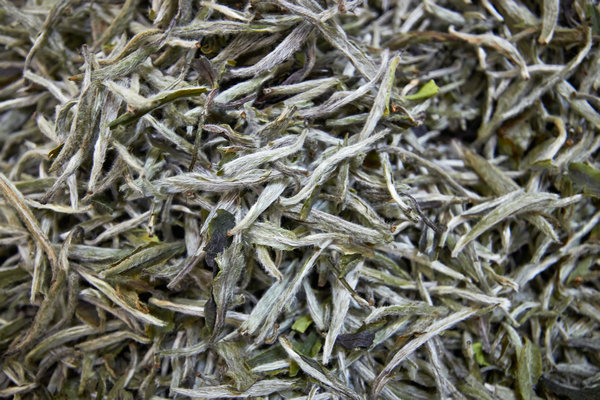
White tea is a rising star in the Chinese tea market. [Photo provided to China Daily] |
A good product usually has a story to tell. The story of white tea is that of a local woman in Fuding, Fujian province, in ancient times, who found white tea on Tailao Mountain to cure a plague of measles among children.
Though white tea took up just 1 percent of the total tea sales in China in 2015, according to the China Tea Marketing Association, it is getting increasingly renowned for its natural taste, unique processing method and health benefits as a rising star in the Chinese tea market.
Written records of white tea date back to the Song Dynasty (960-1279), when Emperor Huizong, Zhao Ji, wrote about a white tea that was a rarity and difficult to make, but exceptional.
The naturally white sprouts are found most famously in two places. One is Anji county in the north of Zhejiang province. But Anji baicha, which is known for its refreshing taste, is prepared in the method of green tea and is thus normally categorized as a green tea.
The modern concept of white tea was firstly produced in areas around Fujian's Fuding and Zhenghe and processed in a different way. After it was picked, the tea leaves were sundried or dried over a slow fire, or in a heated environment, instead of being roasted like green tea.
Because of that light processing, the fine white fluff on the tender leaves is well kept, so that the tealeaves look white when they are ready.
Fujian is making white tea with large white-looking sprouts from dabai (big white) and xiaobai (small white) small tea trees.
Top-grade white tea is made of a single sprout and called baihao yinzhen (white fluff silver needle).
The next grade is made with one sprout and two or three leaves, which are called baimudan (white peony). Shoumei (longevity eyebrow), or gongmei, are made of small white tealeaves, or shrubs, with stronger and older leaves.
Because it is only dried, white tea is believed to best preserve the original nutrients of the tea and reflect the local soil and climate.
Although it does not taste as strongly fragrant as green teas, which are roasted, it is believed to contain a higher level of polyphenols, vitamins and amino acids. Because of that, white tea is considered healthy and can work better to lower blood pressure, reduce blood fat and blood sugar.
In a March 2015 issue of the British Journal of Nutrition, the paper declared that "daily consumption of white tea improves the cerebral cortex metabolic and oxidative profile in pre-diabetic Wistar rats". As a conclusion, the paper suggests daily consumption of white tea "as a good, safe and inexpensive strategy to prevent DM-related effects in the cerebral cortex".
While baihao yinzhen and baimudan made of tender sprouts are good for their freshness, shoumei has a good aging capacity. Local people believe white tea aged for more than five years can be used to treat diseases such as fever, as well as shock in children. It is also said to be able to prevent climate sickness.
White tea in Fujian has a 200-year history, which is rather short compared to other tea varieties, according to Zhang Tianfu, a veteran Chinese tea expert.
In the late Qing Dynasty (1644-1911), white tea was exported to Europe and mixed with black tea as a high-end product, because baihao yinzhen looks nice and stands up in water when it is brewed. Today, Fujian still exports a lot to Hong Kong, Macao, Southeast Asia and Europe.
A new trend has been to make white tea into round cakes like that of pu'er, which both intensifies the taste and gives it a better ability to age.
People in other parts of China, such as Yunnan, have started to use local tea from big tea trees to make white tea, using the same preparation method. These have all added fresh taste to the interesting variety.
Contact the writer at yejun@chinadaily.com.cn
The author is a lifestyle editor with China Daily.
|
|
|
|
|
|
|
|

Copyright 1995 - . All rights reserved. The content (including but not limited to text, photo, multimedia information, etc) published in this site belongs to China Daily Information Co (CDIC). Without written authorization from CDIC, such content shall not be republished or used in any form. Note: Browsers with 1024*768 or higher resolution are suggested for this site.
License for publishing multimedia online 0108263 Registration Number: 20100000002731 

























 Raymond Zhou:
 Pauline D Loh:
 Hot Pot
 Eco China
 China Dream
 China Face