 |
|
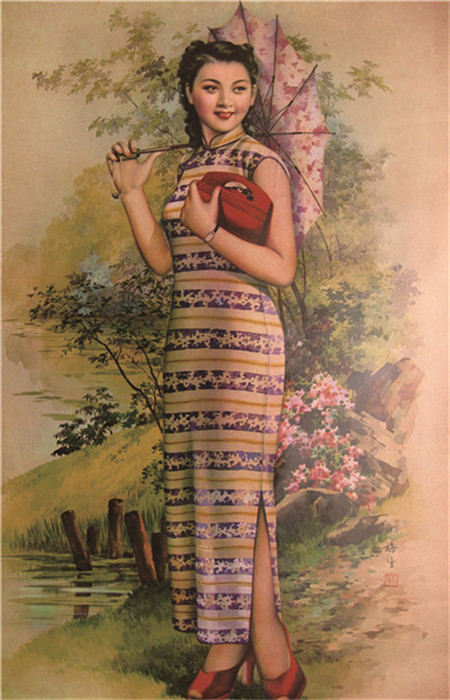
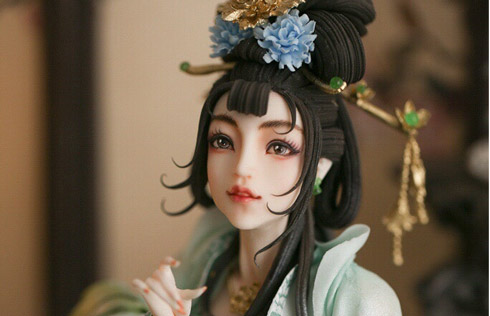
Timeless beauty-Jin Meisheng's illustrations of the 'Shanghai lady'. [Photo provided to China Daily] |
Calendar painting actually started off as a form of product advertising. When Shanghai became a treaty port after the Qing government lost the First and Second Opium War to foreign armies, traders from abroad started coming to the city to sell Western products such as soap, cigarettes and medicine.
In order to attract the locals to buy their products, the foreigners resorted to using classical paintings or painted advertisements by Western artists to promote their wares. But that failed miserably, as most of the locals did not understand the foreign culture. As a result, these traders turned to local artists for help instead.
"They took inspiration from traditional Chinese New Year paintings and started to invite local artists to do advertising painting. This gradually gave birth to the Shanghai-style calendar art," said Chen Qi, deputy director of Shanghai Art Association, during an calendar art seminar held in Shanghai earlier this year.
Apart from beautiful women, people could also find children and home decorations in these calendars, which soon became the representation of what people should strive to achieve in life. The product's image and slogan were usually printed in a corner of the painting.
"It was a kind of advertising art. In the beginning, the advertiser invited Chinese artists to create their own designs, most of which were traditional Chinese subjects such as a popular opera scenario or an ink painting of landscapes," Chen added. "Gradually, as Western culture started to exert a bigger influence on local society, modern women became an overwhelmingly popular subject."
For a long time, exposing too much skin was considered to be taboo in Chinese culture, but calendar paintings shifted societal perception and made revealing attire acceptable. These paintings always depicted a modern Chinese lady; the antithesis of the traditional woman who would never expose her teeth when she smiled. Besides body-hugging cheongsams, calendar women could also be found in sexy sports shorts, modern Western dresses and even swimming suits, and they would be participating in activities such as riding a bicycle or playing tennis. Some would even be depicted as a confident, sophisticated individual smoking in a café.
"One reason the calendar lady became so successful was that it offered everyone the idea of the perfect woman, which was more or less a shortage in the spiritual Chinese society at that time," said Wang Bangxiong, professor from Shanghai Theatre Academy.
Because of the popularity of these calendars, shrewd businessmen often bundled them with their products to attract more sales. The Nanyang Brothers Tobacco Company, which was set up in 1905 and became a major tobacco producer in Shanghai, relied heavily on these calendars to boost their sales. They even had an annual budget set aside for calendar painting.
|
|
|
|
|
|
|
|

Copyright 1995 - . All rights reserved. The content (including but not limited to text, photo, multimedia information, etc) published in this site belongs to China Daily Information Co (CDIC). Without written authorization from CDIC, such content shall not be republished or used in any form. Note: Browsers with 1024*768 or higher resolution are suggested for this site.
License for publishing multimedia online 0108263 Registration Number: 20100000002731 






















 Raymond Zhou:
 Pauline D Loh:
 Hot Pot
 Eco China
 China Dream
 China Face