Cultural riches in shopping hub
|
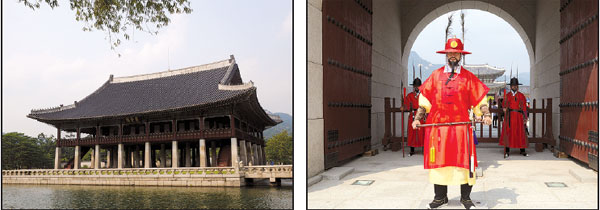
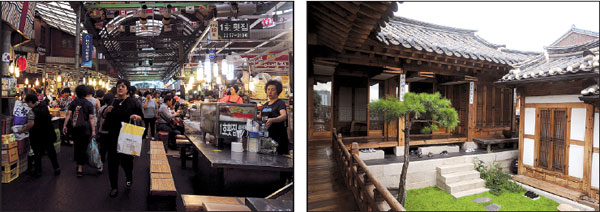
Royal guards in traditional costumes at Gwanghwamun Gate; Simsinheon, a traditional Korean house; Gwangjang Market offers various street food; Gyeongbokgung Palace was the main royal palace of Joseon Dynasty (1392-1910) [Photos By Xu Lin / China Daily] |
Meanwhile, more than two dozen young women queue up to take photos in front of a bungalow wall with a painting which shows blue sky, white clouds and a pair of angel wings.
The site has become popular because a South Korean superstar posed here for a photo.
The murals came up in 2006, after the local government started an art project to improve the village environment.
Tourism has affected the life of the local people in recent years, so you often see cute cartoon street signs reminding visitors to be quiet while they are in the residential area.
Near the village is Daehangno, or College Street. A popular neighborhood with young people, it has more than 150 small theaters and galleries. It also hosts theater festivals throughout the year.
This neighborhood took shape when Seoul National University was moved from the area in 1975.
Marronnier Park was then built in Daehangno. The park is now a place where you can enjoy free music and dance performances by young people on weekends.
Near the park is Gwangjang Market, once known for its old clothes and farm produce but has since grown and includes local street food, which has now become its calling card for both denizens and visitors.
As for food choices, my translator Park Hae-jin says the locals like to eat mung bean pancake on rainy days because the sizzling sound of the pancake in hot oil is like the pitter-patter of rain.
Also along the route is Gyeongbokgung Palace - built in 1395 - which served as the main palace of the Joseon Dynasty (1392-1910) for more than five centuries.
The palace has been expanded, destroyed and rebuilt many times in its long history.