A prescription to protect 'the Earth's kidneys'
 |
|
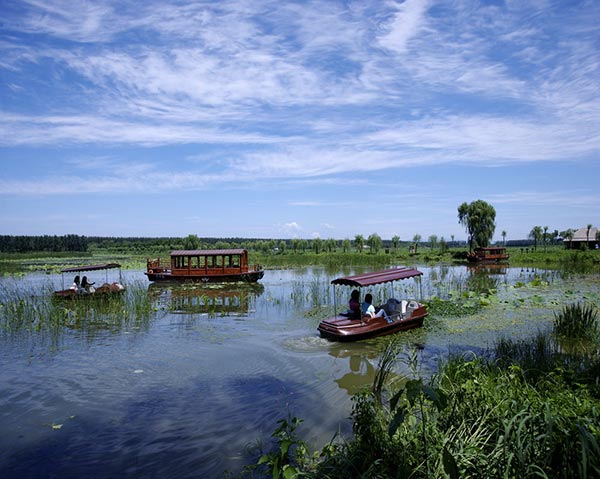
Boats with tourists at the Health Bridge Wetland Park in Beijing's Shunyi district. The park keeps tourism promotions to a minimum and restricts visitor numbers to protect the wetland. [Photo provided to China Daily] |
That's not only in terms of healthier wetlands but also by raising awareness about environmental protection, and crafting a successful balance of preservation and ecotourism.
"Nature's kidneys" absorb toxins. Marshlands sustain biodiversity. They quell floods.
And they improve regional weather.
The capital contains six wetland reserves covering a total of 21,000 hectares.
The city will gradually build a wetlands-protection system based on reserves supplemented by smaller protected lots.
Shunyi district's 330-hectare Health Bridge Wetland Park's recycling plant processes 2 million tons of sewage from Yangzhen township annually. It stores 3 million tons of precipitation, protecting surrounding villages from floods.
And it serves as a vital habitat and migration stopover for birds. It also hosts a diversity of aquatic plants and animals.
A national monitoring station records daily data about the wetland's species, populations and living situations.
Health Bridge has long cooperated with the Beijing Wildlife Rescue and Rehabilitation Center to rescue and free captive birds.
Touch screens, signs and documentaries educate visitors. Visitors can also take electric boats and karts, ride bicycles, fish or play a real-life version of the video game, Counter-Strike.
Deputy director Cai Chunyi suggests bird-watchers contact the park before visiting so staffers can tell them where and when to best observe birds.
Cai says ecotourism revenues are invested in preservation. But the park keeps tourism promotions to a minimum and restricts visitor numbers.
Government efforts have won support from such nonprofits as Beijing's Black Leopard Wildlife Conservation Station.
"The city is making progress in wetland protection and restoration through such actions as returning farmlands to wetlands," founder Li Li says.
"The government is taking a scientific approach to planning. The public is becoming more aware of wetlands' importance."