Hunt for aging's true signs
Updated: 2013-09-08 07:39
By David Stipp(The New York Times)
|
|||||||


How fast are you aging?
Don't look to online calculators of "biological age" for an answer. Those focus mainly on risk factors for diseases, and say little about the mysterious process that turns children to codgers.
Seemingly obvious candidates won't do either. Wrinkles, for example, often have more to do with sun exposure than aging.
But recently researchers have identified some good indicators of time's toll and how fast it's increasing. Developing an "easy way to measure biological age will have a wide array of applications in prediction and prevention of age-related diseases, drug discovery and forensics," said Dr. Kang Zhang of the Institute for Genomic Medicine at the University of California, San Diego.
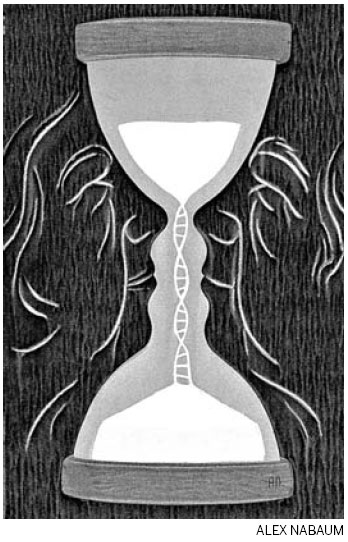
As novel technologies that can detect thousands of age-associated molecular changes in cells have recently come to the fore, Dr. Zhang and his colleagues reported that a kind of molecular aging clock is embedded in our genomes whose speed can be measured via blood testing.
Experts generally agree that acceptable biomarkers of aging should foretell the remaining life span of a middle-age person more accurately than chronological age does. They should also offer a consistent picture of biological age, said Dr. Richard A. Miller, a gerontologist at the University of Michigan. "Do those 50-year-olds with the best retention of immune function also tend to have the least cataracts, good sense of smell, least osteoporosis, lowest blood pressure and best memory?" he explained.
In a 2010 study, Dr. Miller and colleagues analyzed medical records of 4,097 women, collected over two decades beginning when they were in their 60s, to sift out 13 factors that best predicted mortality from different causes.
Oddly, contrast sensitivity - as measured by a test of the eye's ability to pick out lightly shaded images on white backgrounds - was among the most predictive of the 377 factors evaluated. Together, the 13 factors "characterize the clinical presentation of healthy aging," the study concluded.
More recently, Dr. Zhang and his colleagues said the moving parts of the molecular aging clock consist of chemical tags on DNA molecules that control whether genes are active in cells. They found that the patterns of the tags, called epigenetic markers, predictably change with age. In a study published in January in Molecular Cell, the scientists scrutinized 485,000 of these tags in blood cells of 656 people, finding 70,387 tags that were predictive of chronological age.
Already the clock has yielded interesting findings. Men appear to age on average 4 percent faster than women, the scientists have found, which may largely explain why women's life expectancy exceeds men's by about 6 percent worldwide. And the research indicated that tumor cells have aged, on average, 40 percent more than normal cells taken from the same patients.
Researchers at the University of North Carolina at Chapel Hill recently implanted a firefly gene into mice, engineering animals whose cells light up as they age and become "senescent," losing the ability to divide and renew damaged tissue. This loss is tied to aging-related ills in many species. Surprisingly, the brightness levels weren't closely tied to longevity, suggesting that cellular senescence is just part of the aging puzzle. The researchers also found that noncancerous cells near nascent tumors emitted a strong glow: early-stage cancers apparently set off hot spots of accelerated cellular aging.
That means "we can literally see the earliest molecular stages of cancer" unfolding in the mice, said Dr. Norman E. Sharpless, who led the study.
If this continuing research pans out, aging-rate tests may someday offer insights on health risks. But such tests also may well raise privacy and social equity issues.
Insurers might demand that customers take them in order to set premiums for policies. The tests may also reveal how factors like exposure to toxic substances accelerate aging, and by how much.
And age discrimination will gain an entirely new meaning.
The New York Times
(China Daily 09/08/2013 page10)