Shoppers' choice of devices challenges retailers
Updated: 2013-02-17 08:38
By Claire Cain Miller and Stephanie Clifford(The New York Times)
|
|||||||


|
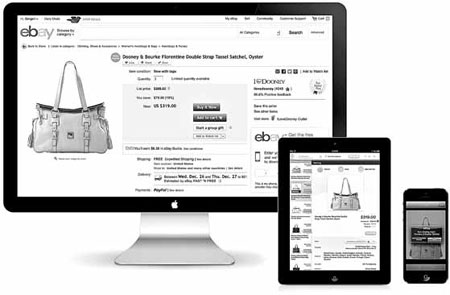
At eBay, if shoppers log in on one device, data like credit card details and saved items will be available on all their devices. eBay |
Ryan O'Neil was in the market to buy a digital weather station. His wife researched options on their iPad, but even though she found the lowest price there, Mr. O'Neil made the purchase on his laptop.
"I do use the iPad to browse sites," Mr. O'Neil said, but when it comes time to close the deal, he finds it easier to do on a computer.
The size of the average order on tablets, particularly iPads, tends to be bigger than on PCs. So retailers have poured money and marketing into mobile Web sites and apps with rich images and, they thought, easy checkout.
But while visits to e-commerce sites and apps on tablets and phones have nearly doubled since last year, consumers like Mr. O'Neil are more frequently using multiple devices to shop. In many cases, they are more comfortable making the final purchase on a computer, with its bigger screen and keyboard. So retailers are trying to figure out how to appeal to a shopper who may use a cellphone to research products, a tablet to browse the options and a computer to buy.
While one-quarter of the visits to e-commerce sites occur on mobile devices, only around 15 percent of purchases do, according to data from I.B.M.
"I've been yelling at customers for two years, saying, 'Mobile, mobile, mobile,' " said Jason Spero, director of mobile sales and strategy at Google. "But the funny thing is, now we're going to say: 'Don't put mobile in a silo. It's also about the desktop.' "
The challenges are daunting. It is technically difficult to track consumers as they hop from phone to computer to tablet and back again. This means customers who, say, fill shopping carts on their tablets have to do all the work again on their PCs or other devices. The biggest obstacle, retailers say, is that the tools used to track shoppers on computers - cookies, or bundles of data stored in Web browsers - don't transfer across devices.
Instead, retailers are figuring out how to sync the experience in other ways, like prompting shoppers to log in on each device. And being able to track people across devices gives retailers more insight into how they shop.
At eBags, customers are shopping on their tablets in the evening and returning on their work computers the next day. But eBags has not yet synced the shoppers across devices, so customers must build their shopping carts from scratch if they switch devices.
"That is a blind spot with a lot of sites," said Peter Cobb, co-founder of eBags. "It is a requirement moving forward."
At eBay, one-third of the purchases involve mobile devices at some point, even if the final purchase is made on a computer. Once shoppers log in on a device, they do not need to log in again. Their information, like shipping and credit card details and saved items, syncs across all their devices. If an eBay shopper is interested in a certain handbag, and saves that search on a computer, eBay will send alerts to her cellphone when a new handbag arrives or an auction is about to end.
"They might discover an item on a phone or tablet, do a saved-search push alert later on some other screen and eventually close on the Web site," said Steve Yankovich, who runs eBay Mobile.
ModCloth, an e-commerce site for women's clothes, urges shoppers to log in after a few clicks on the Web site, so information like credit card numbers and items saved in a shopping cart on another device are accessible. Logged-in users who visit the site using multiple devices are 2.5 times more likely to place an order than those on a single device, according to the company.
On Etsy, where 25 percent of the visits but 20 percent of the sales come from mobile devices, the site syncs items in the shopping cart, favorite items, and purchasing history.
Amazon.com, Nordstrom, Target, Macy's and Gap showed items added to shopping carts across devices. Walmart did, too, though with some snags; it required logging out of and back into the mobile site to update the cart, and on the app, a shopper had to choose the "sync with online cart" option.
Newegg, Kohl's, RadioShack and J. Crew did not sync across devices.
Some technology industry analysts say people just need time to grow comfortable with new technology.
"It's just like in the old days, 15 years ago, the conversation was people are researching what they want on their PCs but still going to the store to buy," said Marc Andreessen, a venture capitalist. "I think that's a temporary phenomenon."
The New York Times
(China Daily 02/17/2013 page10)