SHOWBIZ> Hot Pot Column

|
SHOWBIZ> Hot Pot Column
|
|
Learning to change
By Raymond Zhou (China Daily)
Updated: 2009-06-12 09:03
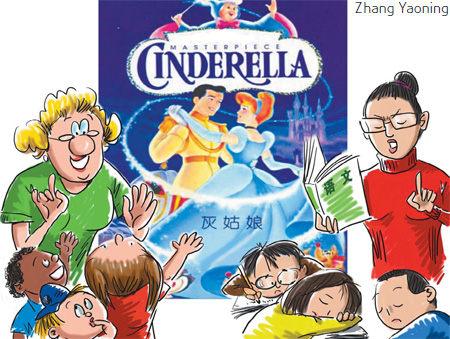 Last year, I received an e-mail story from a friend. She often sends me interesting postings with bi-cultural significance. This one was about the difference between the Chinese and American ways of teaching the Cinderella story. Here it goes: In an American school, the teacher asks her students: What if Cinderella does not leave the ball at midnight? And they answer: She will resume her dirty look. So the teacher concludes, it shows the importance of being punctual and looking your best. She then follows up with a new perspective: Would the students do the same thing had they been her cruel stepmother? They hesitate, but say yes. The stepmother, suggests the teacher, is not totally evil. She loves her own children and her failing is her inability to love others.
The teacher then probes what makes Cinderella resolve to go to the ball despite her stepmother's objections. It's the fairy godmother who offers help, say the students. That shows, continues the teacher, that everyone needs help from friends. The more friends you have, the better you'll cope with future problems. She further examines Cinderella's decision to go to the ball. Even if nobody had objected, she would not have bothered if she had not wanted to go, so her determination was crucial. When you feel others don't love you, you should love yourself, and when others don't give you opportunities, give yourself more opportunities. The students finally examined possible loopholes in the fairytale and discussed how, although everything changed back at midnight, one of Cinderella's slippers did not, which seemed to go against the moral of the story. They were praised for having a sharp eye. Now, the Chinese methodology: Teacher: Did you all preview this text? Student: This is an old wives' tale. Everyone knows it. Who needs to prepare for it? Teacher: Who is the author? Is it Grimms or Andersen? And do you know the life story of the author? Student: We have eyes and the answer is printed in the text. Teacher: What's the significance of this story? Student: It sounds so serious it looks like we are going to be tested later on. Teacher: Now, let's get to the text. Who can divide it into sections? Student: The beginning, the middle, and the last section, as usual. Teacher: Now, about this sentence, is it a simile or a metaphor? Several students start to doze off. |
洛宁县| 西吉县| 庆阳市| 绥棱县| 孝感市| 武冈市| 胶州市| 固镇县| 昆山市| 凤阳县| 文水县| 噶尔县| 綦江县| 宁乡县| 嫩江县| 志丹县| 新乡市| 收藏| 锦屏县| 宜丰县| 五台县| 宣威市| 仙桃市| 霍林郭勒市| 洮南市| 阿克陶县| 开阳县| 泰州市| 白水县| 祁门县| 平罗县| 福鼎市| 湟源县| 普陀区| 巴南区| 江城| 平原县| 正宁县| 尚志市| 永州市| 清水县|