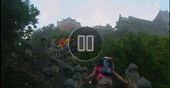
Reciting passages from the Tao Te Ching has been a spiritual practice for over 2,000 years. For people who couldn't read and write it was an important way to learn the text, but even for those who could read, recitation was a vital expression of devotion and a way of spiritual growth.
Because Taoism doesn't make a rigid division between body and spirit, it recognises that physical actions have a spiritual effect.
Classical Taoist sexual techniques are designed to increase a person's sexual energy and to retain it. This is because sexual energy is life-enhancing.
Lao Tzu (Laozi) is traditionally described as the founder of Taoism, but modern writers think he is a legendary figure, and that the book attributed to him - the Tao Te Ching - is actually a collection of writings by many different wise people.
Westerners who study Taoism are sometimes surprised to discover that Taoists venerate gods, as there doesn't seem to be a place for deities in Taoist thinking.
A more useful distinction might be between Chinese Taoism and Westernised Taoism because some forms of Westernised Taoist philosophy add unauthentic new age and other faith elements to Taoism, while removing much of its religious content
Religious Taoism follows two main traditions. Each has a clear hierarchical and well-organised structure with special headquarters, rules, guidelines, ordination rites and registration procedures.
The Taoist ideal is for a person to take action by changing themselves, and thus becoming an example of the good life to others.
Taoism has no founder and no founding date. It grew out of various religious and philosophical traditions in ancient China, including shamanism and nature religion.
The One is the essence of Tao, the essential energy of life, the possession of which enables things and beings to be truly themselves and in accord with the Tao. Taoist texts sometimes refer to the Tao as the mother and the One as the son.
Taoism is an ancient tradition of philosophy and religious belief that is deeply rooted in Chinese customs and worldview.
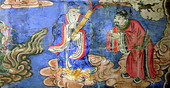
Taoism is not just a school of thought, but also a philosophical, intellectual, spiritual, and folk tradition that, in different times and places, has taken on very different meanings.
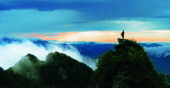
Wudang Taoism came into being during the Song Dynasty (AD 420-479) and became popular across the country during the Ming (1368-1644), thanks to that dynasty’s 3rd emperor Zhu Di.
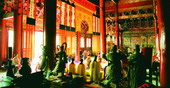
Wudang Mountain, located in Shiyan in western Hubei province, is both a famous scenic spot and a holy site of Taoism, China's indigenous religion.
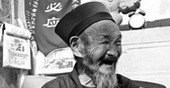
Jia Yongxiang, a Taoist priest, has been living with tens of thousands of bees in a natural cavern for about 14 years in the Wudang Mountains, Central China's Hubei province.
峨边|
道真|
曲阳县|
龙门县|
苍山县|
繁昌县|
固安县|
宝鸡市|
阳春市|
利辛县|
沙雅县|
江津市|
昌图县|
旬邑县|
安阳市|
旅游|
临澧县|
神池县|
沙坪坝区|
上蔡县|
武邑县|
马尔康县|
九江市|
和田市|
玉山县|
堆龙德庆县|
二连浩特市|
莫力|
濮阳县|
治多县|
句容市|
县级市|
满洲里市|
湘阴县|
新宾|
桐城市|
文山县|
汉沽区|
龙岩市|
桃源县|
兴和县|