Innovation on the rise, as companies ramp up their spending on R&D
( China Daily )
Investment in the sector maintains momentum and deemed as key to development
Editor's Note: Last year marked the fifth anniversary of the Third Plenary Session of the 18th CPC Central Committee. With the nation determined to deepen reform, expand opening-up and invest in innovation, China Daily reporters look at different fields to check how the transformative policies are helping to invigorate the national economy.
Chinese enterprises are emerging as first-tier international players, with huge strides in research and development, but more efforts are needed if they are to continuously grow their technological prowess, said experts.
|
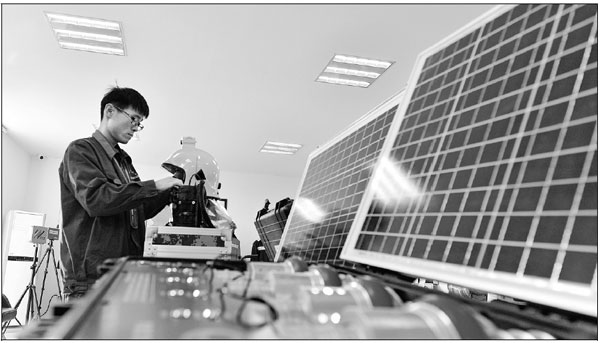
A staff member of an enterprise debugs high-tech helmets for firefighting and rescue in Xingtai, Hebei province. Chen Lei / Xinhua |
Qu Xianming, an expert with the National Manufacturing Strategy Advisory Committee, said domestic companies are making steady progress in R&D, and a string of internationally competitive players are emerging in the fields of internet, artificial intelligence, manufacturing and other sectors.
"China's push to cultivate innovation-driven growth will inject new life into the country's real economy and fuel the integration of cutting-edge technologies with manufacturing," Qu said.
A recent report by Strategy&, a global strategy consulting firm, said that R&D spending by Chinese companies increased 34.4 percent year-on-year in 2018 to total $60.08 billion, the highest growth in the world. The report is based on an annual analysis of the 1,000 biggest global public companies by R&D spending.
Patrick Hui, PwC Chinese mainland and Hong Kong consulting partner, noted in the report that 20 more Chinese companies made it into the Global Innovation 1,000 list compared with 2017.
"As China forges ahead with its innovation-driven growth strategy, innovation will become the top driving force for development," Hui added. "And R&D spending has increased in all industries in China, especially in the software and internet, as well as industrial sectors."
The country has been on a path of evolving from an "innovation sponge", where it absorbs and adapts existing technology and knowledge from around the world, into a global leader in innovation. Already, China has seen a number of homegrown cutting-edge products and services, including high-speed railways, indigenous social networking platform WeChat and independent space exploration.
According to the 2017 report of the World Intellectual Property Organization, China was the only middle-income country to make the list of the world's top 25 most innovative economies.
The achievement was lauded by Wan Gang, vice-chairman of the National Committee of the Chinese People's Political Consultative Conference, who said earlier that, "On the whole, we have met the goal of 'occupying a place' in the major fields of science and technology, which lays a sound foundation for China to be an innovation powerhouse."
Such progress has also been reflected in the number of patents that Chinese companies hold. According to a recent report from leading global patent database IFI Claims Patent Services, China was the only country to buck an international trend, and secure more patents from the United States in 2018.
"Chinese companies, led by Huawei and BOE Technology, gained ground. In fact, China was the only country in the top 10 to actually show an increase in US patent activity; all other countries, including the US, saw declines," said Larry Cady, a senior analyst at IFI Claims Patent Services, in an article posted on the technology blog Venture-Beat.
Despite the progress, more efforts are needed to pursue breakthroughs in a number of areas, including general processors, fundamental consumer and enterprise software as well as other crucial technologies, said Xie Shaofeng, director of the informatization and software service division at the Ministry of Industry and Information Technology.
The view is echoed by Ren Zhengfei, CEO and founder of Huawei Technologies Co Ltd, the world's largest telecom equipment maker and second-biggest smartphone vendor.
Ren once said in an internal letter that without heavy input into basic science, there can be no knowledge about the future, and the company will step up efforts to deepen cooperation between its in-house R&D staff and global scientists.
In the 10 years to 2017, Huawei had collectively invested 394 billion yuan ($58 billion) into R&D.
masi@chinadaily.com.cn
(China Daily 01/22/2019 page16)
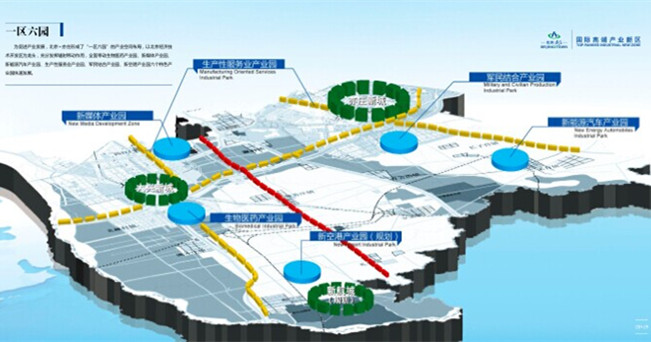 The Area with Six Parks
 Global Top 500