Opening to foreign business to boost industrial upgrade
( China Daily )
 |
|
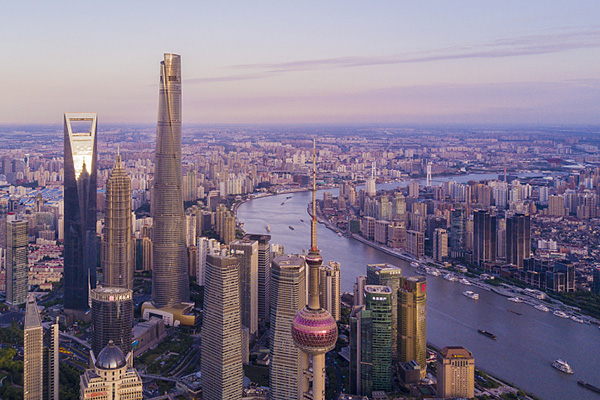
Skyscrapers are seen at the Bund in Shanghai, June 6, 2017. [Photo/VCG] |
China's moves to expand foreign companies' investment options will accelerate the upgrade of the country's economic structure and encourage many domestic businesses to deepen reform and break their monopoly operation, experts said on Thursday.
Those moves include allowing global companies to establish new business through mergers and acquisitions of domestic firms and ensuring that foreign companies can send their profit back to either their home countries or other global markets any time they want, as well as encouraging them to participate in the ongoing mixed-ownership of State-owned enterprises, according to a document released by the State Council on Wednesday.
"Even though China does not lack capital, it is necessary to boost inbound flows of foreign capital, pushed by upgrading industrial structure, demand for advanced technologies and global resource allocation," said He Manqing, director of the Foreign Investment Research Institute of the Beijing-based Chinese Academy of International Trade and Economic Cooperation.
Alexandra Voss, chief representative of the Delegation of German Industry and Commerce in Beijing, said in a statement: "We now hope concrete policies will arise from this position and will be implemented as soon as possible to further improve the business environment for foreign investors and ensure equal treatment for all companies operating in China."
Eager to restore its ability to gain foreign direct investment, China will also make a clear timetable and guidelines to gradually open businesses including new-energy vehicle manufacturing, vessel design, railway passenger service, regional and regular aircraft maintenance, gas stations, call centers, entertainment, banking, insurance and securities businesses to foreign investors.
Sang Baichuan, director of the Institute of International Business at the University of International Business and Economics in Beijing, said with costs rising, China needs to think out of box to further open up and attract foreign investment to help domestic growth and support globalization.
Foreign companies have not only sent capital to China, they also brought advanced management experience, technologies, sales strategies and third party markets to the country. An unstable FDI volume certainly will put pressure on China's economic growth.
Foreign companies had invested $1.6 trillion and established more than 830,000 enterprises in China since 1983, data from the Ministry of Commerce show.
Zhang Yansheng, chief economist at the China Center for International Economic Exchanges, said China has always been implementing favorable policies and it will further enhance its appeal to foreign investors, thereby combating the decline in advantages China used to have and the fierce competition for foreign investment from other countries.
Zhang doesn't agree with some voices saying foreign investment has reached a peak in China. He said if China signs bilateral investment treaties with the United States and European Union sooner or later, there will be a promising increase in foreign investment just as when it joined WTO years back.
Huo Jianguo, vice-president of the China Institute for WTO Studies, warned that more opening means more risk and poses bigger challenge on the country's risk management capability. That will test both the government policy-making abilities and domestic companies' capability in adapting new market environment.
Environment easier for global firms
GUANGZHOU-China's business environment is becoming easier to navigate for international corporations entering the market.
Lyle Charles Laxton, CEO of South Africa-based Laxton Group, moved the company's technology and production headquarters to Guangzhou in South China's Guangdong province.
The South African entrepreneur made the decision because it was clear the Chinese government was opening the market and making it easier for global companies to invest and establish businesses in China.
"The opportunities in China are endless and the market is exceptionally large," Laxton said. "It is possible to be very successful in China. But patience is required to understand the nuances of the environment and market.
"The legal framework and judicial system is fair and actually works," he added. "In general, it has protected us when we required protection, which is encouraging for any foreign investor."
Founded in 2004 in Johannesburg, Laxton moved its technology and production headquarters to Guangzhou in 2009, where its factory has 200 permanent employees.
The multinational group specializes in manufacturing self-service kiosk terminals for governments and corporations.
Last year, the company obtained a high-tech firm certificate from the Guangdong provincial government.
XINHUA
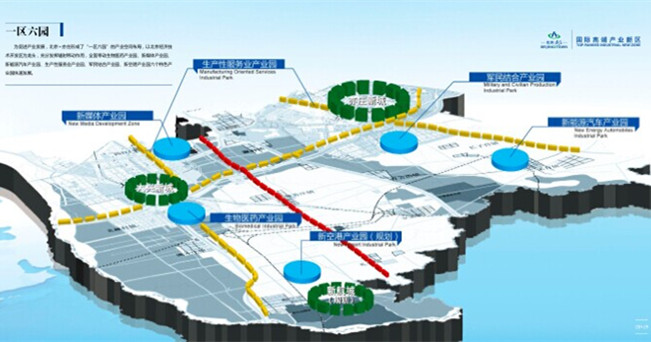 The Area with Six Parks
 Global Top 500