Beijing eases oversight of some investments overseas
( China Daily )
China will relax its supervision of outbound investment projects, with attention focusing only on investment in several key industries after tightened measures were implemented last year.
"Regulatory authorities will continue to pay close attention to overseas investment in key industries such as property, hotels, entertainment, cinemas and sports clubs," said Yan Pengcheng, spokesman for the National Development and Reform Commission.
Yan said companies planning to invest in those industries in foreign countries should "make cautious decisions".
Those industries are the latest areas to fall under the government's focus, he said.
Companies will have to submit additional documents to win approval, according to the Ministry of Commerce.
The announcement narrows the number of areas facing such scrutiny — it removed areas including potential investment risks posed by "small parent companies with large subsidiaries and by new enterprises established in a short period of time rushing to go global."
These criteria used to be included in the documents released by regulatory bodies in December.
It is that additional regulation that led to a reduction in the amount of outbound investment in the first half of 2017, Yan said.
China's nonfinancial outbound investment plunged by 45.8 percent year-on-year in the first half to $48.19 billion, according to the Ministry of Commerce.
During that period, China's real estate investment in foreign countries fell by 82.1 percent year-on-year, and the outbound investment in culture, sports and entertainment decreased by 82.5 percent year-on-year, according to the Ministry of Commerce.
Yan said the Chinese government supports legal outbound investment activities.
"Projects involved in the Belt and Road Initiative will be encouraged, in particular," he said.
Bai Ming, deputy director of the research institute under the Ministry of Commerce, said it makes sense for the government to keep an eye on certain types of outbound investment projects.
He said doing so is important because many domestic companies lack enough knowledge, such as political risks and the business environment in foreign countries.
"In the long run, the government will give more freedom to companies seeking to develop business in foreign countries," he said.
Bi Jiyao, deputy director of the Academy of Macroeconomic Research with the NDRC, said the government should continue the opening-up process and promote international capacity collaboration.
In the meantime, China should also increase the resilience of the domestic economy through supply-side re?forms, he said.
China has made much progress while implementing key tasks involved in supply-side reform, according to the reform commission.
For instance, China had achieved 74 percent of the annual target for coal capacity cuts by the end of June, with 111 million metric tons of capacity forced out of the market, according to the NDRC.
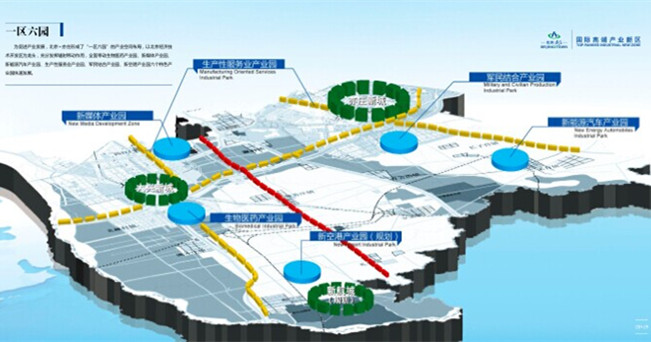 The Area with Six Parks
 Global Top 500