Belt and Road Initiative opens new era of global cooperation
( Xinhua )
BEIJING-After 20 days, the East Wind train arrived in Budapest, marking the revival of the old Silk Road and providing fresh impetus for global cooperation. The train arrived on Friday, with its 41 wagons full of clothes, toys and other Chinese goods, as well as the dust and grime collected through countries including Kazakhstan, Russia and Belarus on a journey of over 9,300 km.
From China's Xi'an, the train rumbled along a route that saw trade first flourish between China and Europe more than 2,000 years ago.
Xi'an, then known as Chang'an, was the capital of China, the start of the Silk Road, and an important nexus of international trade and culture.
The city is expected to regain some of its past glory as China expands its international trade links inland. On April 1, the country announced seven new free trade zones, five of which are in inland provinces including one in Xi'an.
Xi'an now has freight train routes to Budapest, Hamburg, Moscow and Warsaw, taking Chinese goods to Europe and bringing wine, olive oil and pharmaceuticals back to China.
Faster than sea and cheaper than air, China now has express freight services to 28 European cities. Since March 2011, more than 3,500 trips have been made, and the figure should rise to 5,000 in 2020.
Besides rail connections, China is moving forward with infrastructure projects, including roads, ports and oil pipelines, all part of an ambitious plan: the Belt and Road Initiative, a transnational network of trade, long-term investment and economic development.
The initiative, comprising the Silk Road Economic Belt and the 21st Century Maritime Silk Road, was first proposed by China in 2013. It is expected to include more than 60 percent of the world's population and more than one third of global economic output.
The initiative, which has three major strands-infrastructure, trade and investment, and industrial capacity cooperation-will inject fresh energy into the world economy, said Chen Xiaochen, a researcher at the Chongyang Institute for Financial Studies, China Renmin University.
While de-globalization is emerging in some Western countries, China firmly upholds the idea of openness and common development.
Globalization is changing largely because of the rise of China and is now more about investment, infrastructure and development rather than just trade, said Amitav Acharya, writer of The End of American World Order in a recent interview with Xinhua.
In the context of weak global growth, trade and a 13-percent drop in global foreign direct investment, the Belt and Road Initiative has won wide support. More than 40 countries and international organizations have signed agreements with China on jointly advancing the initiative. Nearly 20 countries and more than 20 international organizations are expected to sign cooperative documents with China next month.
"The Belt and Road Initiative is against narrow-minded protectionism and isolationism," said Sergei Luzyanin, director of the Far Eastern Studies Institute of the Russian Academy of Sciences. "We only had the Western European-American option of integration and economic development in the 1990s, now there is a new option."
"The Belt and Road has become the most important public good China has provided to the world. It was first proposed by China but now is for all countries to enjoy," Chinese Foreign Minister Wang Yi said.
Since 2013, China has invested more than $50 billion in Belt and Road economies. A total of 56 economic and trade cooperation zones have already been built by Chinese businesses there, generating nearly $1.1 billion in tax revenue and creating 180,000 local jobs.
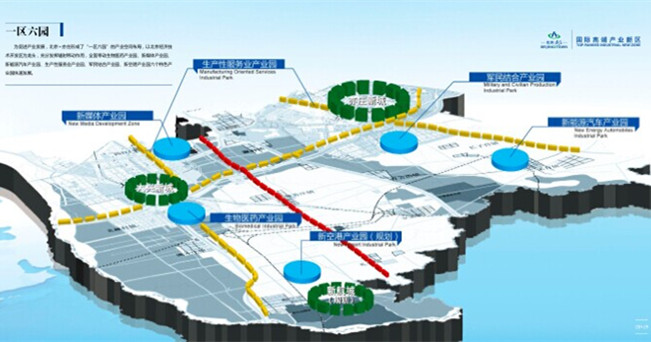 The Area with Six Parks
 Global Top 500