The making of China's consumer society
( China Daily )
As a result, SOEs, which have long specialized in single markets or products, have now begun to recognize that they need to retool to compete both in China and in global markets. Given that SOE reform has long been on China's agenda, this extra impetus may prove beneficial. But the challenge of determining how to create a level playing field for healthy competition and improve capital allocation in the Internet Era remains.
It is not just China's large companies that need to rethink their business models. As China's e-commerce platforms become increasingly global, they may erode the dominance of giant multinationals in international trade. Already in 2015, China's cross-border e-commerce amounted to an estimated 5.2 trillion yuan, or 17.6 percent of the country's total trade; it may reach 8 trillion yuan, or 23 percent of total trade, by next year.
All of this growth is great news for China; indeed, at a time of slowing performance in many traditional sectors, online retailing could be an economic lifesaver. But it also represents a major challenge for a government that has long relied on top-down decision-making.
China's e-commerce revolution enables the country's consumers to decide where to put their money. They can choose not only what kinds of goods and services they deem worthwhile, but also where to live and receive an education. As a result, they have become a key driver behind the transformation of the housing market, supply chains, finance, and even monetary policy.
The task for China's leaders is to respond more effectively to their citizens' needs and desires, including by accelerating progress on economic reform. Specifically, they must phase out obsolete supply chains saddled with overcapacity, bad debts, and falling employment, while taxing the winners in the e-commerce game. These imperatives are challenging traditional approaches to monetary, fiscal, industrial, environmental, and social policies, while testing the capacity of the bureaucracy and political system.
China's transformation into a consumer society will have profound implications for domestic and global suppliers and distributors of goods and services.
At first, it might hurt some of China's trading partners, particularly the emerging economies that have long depended on Chinese demand for their commodity exports. The decline in Chinese imports has already contributed to a decline in commodity prices. Moreover, foreign importers may find that Chinese-manufactured consumer goods now cater more to local tastes and preferences.
Whatever challenges emerge, the fact is that a prosperous China, underpinned by local consumers, will contribute to-and shape-a prosperous global economy. We can thank e-commerce for that.
Andrew Sheng is a distinguished fellow of the Asia Global Institute at the University of Hong Kong and a member of the UNEP Advisory Council on Sustainable Finance. Xiao Geng, director of the IFF Institute, is a professor at the University of Hong Kong and a fellow at its Asia Global Institute. Project Syndicate
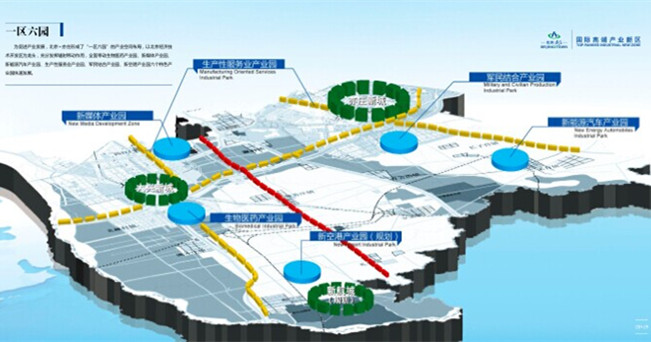 The Area with Six Parks
 Global Top 500